
Clear Xanthan Gum is valued for more than its nearly transparent appearance. In a bowl of dressing, it can help oil and water stay blended, while a small amount may give a sauce a smoother, fuller feel. It is also used to thicken soups, beverages, and other foods where visible particles would change the finished look. The effect depends on the recipe, mixing method, and amount used. Too much can make a product feel slippery or overly thick. Small details matter.
Food-colloid researcher David Julian McClements’ work offers a useful principle, paraphrased here rather than quoted verbatim: “Texture depends on how ingredients interact, not on one ingredient alone.” That perspective helps explain why Clear Xanthan Gum performs differently across products. In a cold drink, it may help suspend fine particles; in a sauce, it may improve body and reduce separation. Manufacturers also consider hydration, processing, and storage when assessing its performance. Those variables deserve attention. This guide explores common uses, practical benefits, and formulation limits, while distinguishing clear appearance from guaranteed clarity. A clear gum cannot make every mixture transparent, and results may vary. That caveat is easy to overlook.
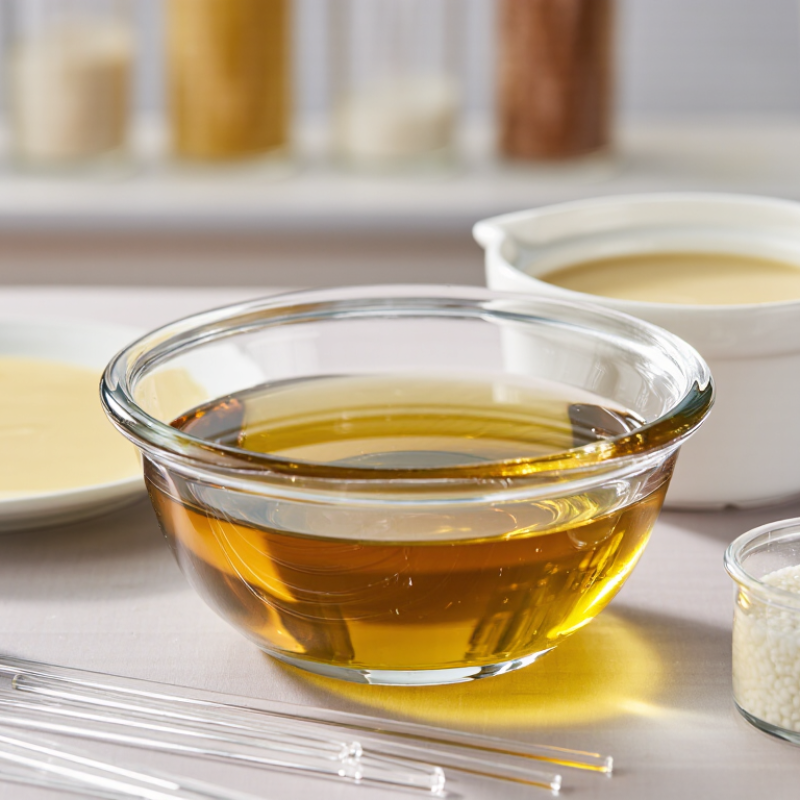
Clear xanthan gum is a low-haze grade of xanthan gum, not a different molecule. It is a polysaccharide made by the bacterium Xanthomonas campestris during fermentation. The FAO/WHO JECFA specification describes its production by fermenting carbohydrates with this microorganism. After fermentation, the gum is separated from the broth, commonly precipitated with alcohol, then dried and milled. Purification and particle handling help reduce visible specks and cloudiness. That matters in clear sauces, dressings, and beverages, where even slight haze can show.
The finished powder thickens water and helps suspend fine particles. Clear grades are selected for low turbidity, but clarity depends on the whole recipe, too. Minerals, acidity, mixing, and hydration can change the final appearance. A practical check is to stir a small amount into water and inspect it against a printed line. Look for lumps and haze. EFSA’s 2017 re-evaluation of xanthan gum (E 415) found no safety concern at reported use levels; this is a safety assessment, not a guarantee that every formulation will look or perform alike. A little humility helps here: “clear” describes an application result, not a promise of perfectly transparent liquid.
Clear xanthan gum is useful when a formula needs body without looking cloudy. A suitable grade can thicken water-based products while keeping them visually transparent. The result depends on the full recipe, not just the gum. That detail matters.
Its long-chain structure creates viscosity at low use levels, helping a clear gel feel less watery. It also shows shear-thinning behavior: the mixture can flow more easily when poured or spread, then regain some thickness at rest. This can help keep fine particles suspended, though it will not make every particle disappear. Clear appearance is not the same as perfect stability.
Xanthan gum tolerates a range of acidity and temperatures, which can be useful when a formula changes during processing or storage. Still, salts, solvents, and other ingredients may affect clarity and texture. Add the powder gradually with good mixing; dumping it into still water can leave stubborn lumps. Let the mixture hydrate fully before judging its appearance. A few tiny bubbles can make a clear sample look hazy, so allow time for them to rise. Small-batch testing is sensible. I would not assume the first test tells the whole story.
Xanthan gum can thicken and stabilize clear formulations at relatively low use levels. The ranges shown are indicative formulation starting points; the amount needed depends on the product, desired texture, and xanthan gum grade.
Clear xanthan gum is used to give foods and drinks body without adding much flavor. In beverages, a small amount can help keep cocoa, fruit pulp, or spice particles from settling at the bottom. It can also lend a smooth, lightly thickened texture to smoothies, drinkable yogurt, and pourable syrups. The liquid may look clearer than one made with a cloudier thickener, but the result depends on the full recipe. Clear does not mean invisible in every drink.
Use a light hand. Too much can make a beverage feel slippery or gel-like. A practical approach is to blend the gum with a dry ingredient, such as sugar, before gradually mixing it into the liquid. This helps limit clumps. It needs water to hydrate. Let the drink rest briefly, then check its texture; xanthan gum can continue thickening as it hydrates. For a thin juice drink, use less than you would for a smoothie or sauce. Small adjustments matter. Acidity, temperature, and other ingredients can change the final feel, so a small test batch is often more useful than guessing.
What Is Clear Xanthan Gum Used For?
Uses in Personal Care and Household Products
Clear xanthan gum is a water-soluble ingredient used to thicken and stabilize many liquid formulas. In personal care products, it can give lotions, shampoos, and facial gels a smoother, more consistent feel. It may also help suspend small particles, so they settle less quickly during storage. A clear grade can be useful when a formula needs body without looking cloudy. Small amounts matter. Too much may leave a stringy texture or make a gel feel tacky on skin. Formulators typically add it gradually and allow time for it to hydrate fully. The finished product still needs suitable preservation and stability testing.
In household products, clear xanthan gum can thicken liquid cleaners and help keep ingredients evenly dispersed. A thicker cleaner may cling longer to a vertical surface, such as a shower wall, instead of running straight down. It does not provide cleaning power by itself; that comes from the formula’s other ingredients. Results can vary with salts, surfactants, and mixing methods, so a sample batch is worth checking before scaling up. It is not a perfect fix. A formula can look smooth at first and still separate later, which is why appearance and texture should be checked over time.
| Product area | Typical product examples | What clear xanthan gum does | Why a clear grade may be useful | Formulation notes |
|---|---|---|---|---|
| Facial cleansers | Gel cleansers and rinse-off washes | Thickens the water phase and helps give the product a smooth, gel-like texture. | Can help preserve a clean appearance in formulations designed to look transparent or lightly colored. | Compatibility and viscosity depend on the surfactants, salts, pH, and other ingredients in the formula. |
| Shampoo and body wash | Liquid hair and body cleansers | Modifies flow and helps stabilize the texture of the liquid. | Useful when the product design calls for a clear or translucent look. | It is a thickener and stabilizer, not a cleansing agent; the surfactants provide the cleansing action. |
| Liquid hand soap | Hand-washing gels and liquid soaps | Adds viscosity and can help keep the product evenly textured during use. | Supports transparent presentation when the other ingredients are also compatible with clarity. | Dispersion and hydration should be managed to reduce clumping; final clarity depends on the whole formula. |
| Lotions and gels | Light lotions, after-sun gels, and other topical gels | Thickens the water phase and can help reduce separation in suitable emulsions. | A low-haze grade may be preferred for clear or translucent gel products. | It does not replace the need for an appropriate emulsifier in an oil-and-water lotion. |
| Dishwashing liquid | Hand dishwashing liquids and cleaning gels | Adjusts thickness and helps suspend or distribute ingredients in the liquid. | Can suit clear-product designs when the detergent system and other ingredients remain compatible. | The cleaning performance comes from the detergent ingredients, not from xanthan gum. |
| All-purpose cleaners | Liquid household surface cleaners and cleaning gels | Provides viscosity and may help keep suspended components more evenly distributed. | May be selected for formulations where appearance and transparency matter. | Test the finished formula for sprayability, residue, and compatibility with its intended surface and cleaning ingredients. |
| Specialty household liquids | Selected acidic or alkaline liquid cleaners | Can act as a thickener and rheology modifier in some formulations. | A clear grade can help limit visible haze where a transparent appearance is desired. | Performance varies with pH, salts, solvents, and surfactants; verify stability and viscosity in the finished product. |
Clear xanthan gum is useful when a recipe needs body without an obvious haze. It suits clear fruit drinks, syrups, light sauces, and dressings. Choose a food-grade product with a specification for low turbidity, then check its recommended dispersion method. “Clear” is not a guarantee: the finished liquid, acidity, minerals, and mixing conditions can all affect appearance.
For a small trial, weigh the gum rather than estimating by spoon. Blend it with sugar first, or sprinkle it slowly into a strong vortex; adding it all at once invites stubborn clumps. Let the sample hydrate, then inspect it against a white background and taste it. I treat clarity as a test, not a promise. The FDA lists xanthan gum as a stabilizer and thickener for food use under good manufacturing practice (21 CFR §172.695). EFSA’s 2017 re-evaluation found no safety concern at reported uses and concluded that a numerical acceptable daily intake was unnecessary (EFSA Journal 15(7):4909). Keep the trial modest, and adjust gradually; a little too much can make a drink feel slick.
It is a low-haze grade of xanthan gum, not a different molecule. It is made through carbohydrate fermentation.
After fermentation, the gum is separated, dried, and milled. Purification helps reduce visible specks and cloudiness.
No. It describes a low-haze grade, but the full recipe affects the final look. Not a guarantee.
Stir a small amount into water and view it against a printed line. Look for haze and lumps.
Add the powder gradually while mixing well. Let it hydrate fully before judging the texture. Test first.
Minerals, acidity, salts, and other ingredients can affect clarity. Tiny air bubbles can also create haze; give them time to rise.
It can help keep fine particles suspended. It will not make every particle disappear, and clarity does not ensure perfect stability.
It thickens water-based mixtures, sometimes at low use levels. The mixture can flow more easily when poured, then thicken again at rest.
No. Acidity, temperature, mixing, and other ingredients matter. One quick test may not tell the whole story.
A 2017 evaluation found no safety concern at reported use levels. That assessment does not guarantee every formula will look or perform alike.
Clear Xanthan Gum is a transparent or low-haze form of xanthan gum, a thickening and stabilizing ingredient made through the fermentation of sugars, followed by processing and purification. Its ability to help control thickness, suspend particles, and maintain a consistent texture makes it useful in formulations where clarity matters. It can also perform across a range of temperatures and conditions, though its effects depend on the product’s overall recipe.
In foods and beverages, Clear Xanthan Gum can add body, improve consistency, and help keep ingredients evenly distributed without making a product noticeably cloudy. It is also used in personal care and household products to adjust viscosity and support stable textures. When selecting and using it, consider the desired clarity, thickness, and compatibility with other ingredients. Add and disperse it carefully according to the formulation’s needs to help prevent clumping and achieve a smooth, uniform result.
