
Choosing the right Thickener Powder can shape your product’s texture, stability, appearance, and customer experience. A smooth sauce, creamy beverage, or consistent personal-care formula begins with more than a viscosity number. It requires careful attention to ingredients, processing conditions, storage, and final use.
Dr. Peter BeMiller, a respected starch scientist and author, stated, “The functionality of starch depends on how it interacts with the entire food system.” This principle applies across many Thickener Powder applications. A powder that performs well in a cold drink may fail in a heated sauce. Another may create excellent thickness but leave a chalky mouthfeel. Small details matter. Water temperature, mixing speed, pH, salt, sugar, and shear can change the result.
Testing reveals the truth.
A practical selection process should begin with the target texture. Do you need fast hydration, heat resistance, freeze-thaw stability, or a clean label? Compare samples under real production conditions, not only in a laboratory beaker. Observe the powder during pouring. Check for lumps, settling, stringiness, and changes after twenty-four hours. Some products also require a thicker texture than consumers actually prefer, which can become an overlooked mistake.
This guide explains how to compare Thickener Powder types, evaluate technical specifications, and match performance with product goals. It also considers cost, dosage, supplier consistency, and regulatory suitability. The “best” powder is rarely universal. It is the one that performs reliably in your specific formula, process, and market.
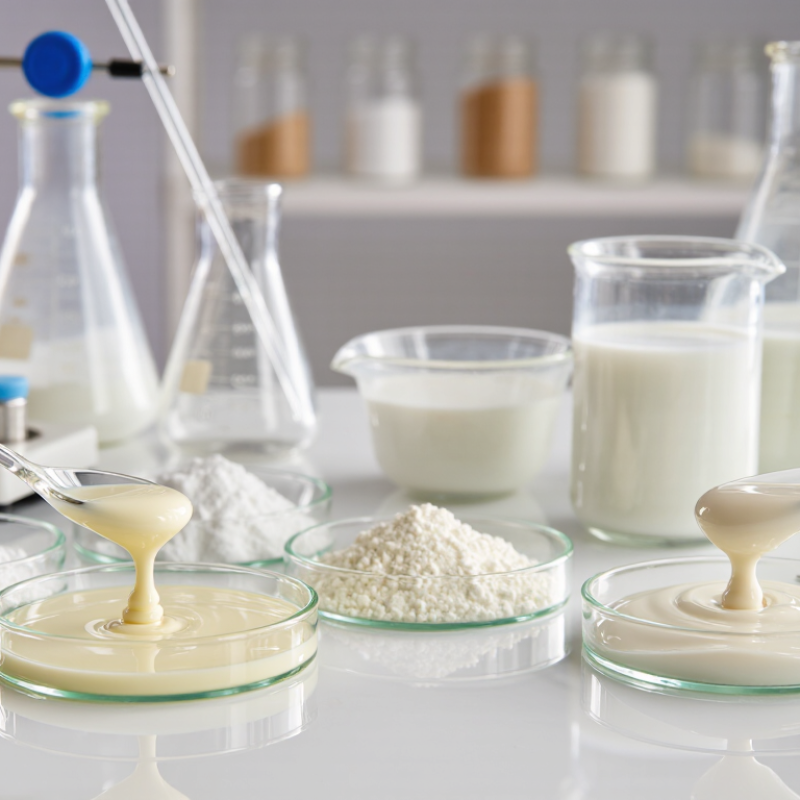
Thickener powder is a dry ingredient that increases a product’s viscosity, stability, or body after hydration. It does not simply “make food thicker.” Its particles absorb water, swell, or form a three-dimensional network around liquid molecules. Starch thickens through gelatinization during heating, while gums often hydrate in cold water. Protein-based powders can build structure differently. The choice depends on the product’s pH, temperature, salt level, shear, and storage time. According to Mordor Intelligence’s Food Thickeners Market report, the sector is projected to grow from about USD 11.8 billion in 2024 to USD 15.5 billion by 2029. That growth reflects demand for improved texture and processing stability.
Small tests matter. Add the powder gradually into actively moving liquid, because poor dispersion can create dry lumps with a soft center. Check viscosity after hydration, not immediately after mixing. A 2024 MarketsandMarkets report on food texturizing agents identifies hydrocolloids, starches, and proteins as major functional categories. Each reacts differently to heat and acidity. Xanthan-type gums may tolerate acidic systems, while some starches can lose body after freezing and thawing. Salt can also weaken or change hydration. A bench test can still mislead. Processing speed, cooling rate, and mineral content may differ at production scale. Measure flow, spoon coating, separation, and mouthfeel at realistic temperatures. The thickest sample is not always the best one. Sometimes it feels heavy, chalky, or strangely elastic.
Thickener powders increase viscosity by absorbing water, swelling, binding water, or forming a three-dimensional network. The chart shows indicative pH compatibility ranges for commonly used thickener types. The actual performance depends on grade, concentration, temperature, salts, shear, and processing conditions.
For acidic products, xanthan gum and selected modified starches are often considered first. Guar gum and CMC can work well in mildly acidic to neutral systems, while alginate is commonly selected when gel formation or controlled texture is required. Always confirm the final choice through formulation testing.
Choosing a thickener powder starts with the product, not the supplier’s promise. Define the target viscosity, flow, and mouthfeel before selecting an ingredient. A pourable sauce needs different control from a spoonable cream. Texture matters.
Product pH is a major factor. Some powders hydrate well in acidic formulas, while others lose strength. Salt, sugar, alcohol, oils, and minerals can also change performance. Check the processing temperature and mixing speed. Heat may improve hydration, but excessive shear can reduce the final viscosity. Add the powder too quickly, and lumps may form around the mixer.
The product’s storage conditions deserve equal attention. Test viscosity after heating, cooling, freezing, and repeated use. A thickener that performs well on day one may thin during storage. In formulation work, I have seen small laboratory tests give overly optimistic results. Larger batches often mix differently. That is easy to overlook. Run pilot trials with the actual equipment and process time. Measure viscosity, appearance, separation, and sensory texture at several dosage levels. Also review applicable food, cosmetic, or industrial safety requirements for the intended market. The lowest effective dosage is not always the most stable choice. Sometimes a slightly higher level creates better consistency, but only testing can confirm it.
Choosing the right thickener powder depends on your product’s pH, temperature, and desired mouthfeel. A powder that works in a sauce may fail in a clear beverage. From bench testing, I have found that texture often matters more than maximum viscosity. Test it warm and cold.
Xanthan gum creates strong viscosity at low use levels and performs well across different temperatures. It can produce a slightly elastic, slippery texture when overused. Guar gum thickens quickly and gives a softer, creamier body. However, it may lose performance in acidic formulas. Starch powders provide a familiar, substantial texture in soups and fillings. Some become thin after freezing and thawing. Cellulose-based thickeners can improve suspension and stability without adding much flavor. That benefit is easy to overlook.
For acidic drinks, compare xanthan and cellulose options in small, measured batches. For hot sauces, evaluate starch performance after heating and cooling. Always hydrate powders properly. Adding them too quickly may create stubborn lumps. I once judged a formula after ten minutes, which was too soon. The blend continued thickening for nearly an hour. A second test gave a different result. Measure viscosity, appearance, and pour behavior at fixed times. Keep records. Small process changes can alter the final texture.
Testing thickener performance begins with a controlled formula. Keep the water quality, powder level, mixing speed, and temperature consistent. Small changes can distort the result.
Prepare several samples with different thickener concentrations. Record the powder weight precisely. Add it using the same method each time. Observe wetting, lump formation, and hydration speed. A simple mixing log can reveal problems that a final viscosity reading may hide. Measure viscosity after hydration, then repeat the test after 24 and 72 hours. The sample may become thinner or thicker later.
Test the formula at its expected pH and temperature range. Heat one sample, cool another, and expose a third to repeated temperature changes. Check flow from a dropper, spread on a surface, and feel between gloved fingers. These practical observations matter for real use. A sample can show excellent viscosity but feel stringy or leave residue. That result should not be ignored. I would also test salt, oils, and active ingredients separately when possible. Their effects are easy to underestimate. Repeat each test at least twice, preferably with a fresh batch. Perfect results from one trial can be misleading. If the data conflict, adjust one variable and test again. Reliable selection comes from patterns, not a single attractive number.
Choosing a thickener is only the starting point. The real work begins during final formulation.
MarketsandMarkets reported that the global hydrocolloids market may grow from about USD 9.0 billion in 2023 to USD 11.0 billion by 2028. This growth reflects demand for stable texture across food, personal care, and industrial products. Yet market growth does not identify the right powder for your formula. Measure viscosity under real conditions. Test the product at its target pH, salt level, temperature, and shear rate. A thickener that performs well in a beaker may fail during pumping or filling.
Use a small dosage ladder, such as 0.1%, 0.3%, and 0.5%, then record viscosity, appearance, hydration time, and storage changes. Follow recognized methods, such as ISO 2555 for apparent viscosity when suitable. For fast hydration, control powder dispersion and avoid dumping it into one spot. Poor dispersion creates lumps. It also creates misleading test results.
Grand View Research has identified food hydrocolloids as a steadily expanding market, supported by demand for cleaner texture and product stability. However, “cleaner” does not always mean better. I would compare mouthfeel, processing tolerance, and cost together. Sometimes the lowest effective dosage is not the most reliable choice. Retest after heat exposure and repeated mixing. The first result may be wrong.
Start with target viscosity, flow, and mouthfeel. A pourable sauce needs different control from a spoonable cream. Texture matters.
Product pH can strongly change hydration and viscosity. Some powders work well in acidic formulas, while others lose strength. Test the actual formula.
Salt, sugar, alcohol, oils, and minerals may change thickener behavior. Test these ingredients separately when possible. Their effects are easy to underestimate.
Heat may improve hydration, but excessive shear can reduce final viscosity. Adding powder too quickly can create lumps around the mixer. Slow addition helps.
Test several dosage levels using precisely weighed powder. The lowest effective dosage may not provide stable consistency. A slightly higher level may perform better, but testing must confirm it.
Record wetting, lump formation, hydration speed, and viscosity. Measure viscosity after hydration, then again after 24 and 72 hours. One reading is not enough.
Test samples after heating, cooling, freezing, and repeated temperature changes. Check viscosity, separation, appearance, and sensory texture. Day-one performance can mislead me.
Laboratory tests may look better than larger batches. Equipment, mixing speed, and processing time can change the result. Use the actual equipment when possible.
Check flow from a dropper and spreading on a clean surface. Feel the sample between gloved fingers. Watch for stringiness, residue, or unexpected separation.
Adjust one variable and test again with a fresh batch. Repeat each trial at least twice. Reliable selection comes from patterns, not one attractive number.
Choosing the right Thickener Powder is essential for creating a product with the desired texture, stability, and user experience. A thickener works by absorbing liquid, forming a network, or modifying the flow behavior of a formula. Its performance depends on factors such as the product’s water content, pH, temperature, processing method, target viscosity, and compatibility with other ingredients. Understanding these conditions helps narrow the selection between different powder types, each of which may offer distinct benefits in clarity, suspension, spreadability, stability, or resistance to heat and storage changes.
Before making a final choice, test each candidate in a small sample using the intended mixing order, concentration, shear level, and processing temperature. Evaluate viscosity, appearance, smoothness, dispersion, stability, and performance over time. The best Thickener Powder is not simply the one that creates the highest viscosity, but the one that delivers balanced performance throughout the product’s full lifecycle. After testing, optimize the dosage and processing conditions to achieve consistent quality, efficient production, and a pleasant final texture.