Choosing the right Hpmc Thickener supplier requires more than comparing prices. Product consistency matters inside a mixing tank, mortar bag, or pharmaceutical batch. A small viscosity change can affect water retention, surface finish, pumpability, and shelf stability.
MarketsandMarkets reports that the global cellulose ethers market could grow from approximately USD 5.3 billion in 2023 to USD 6.9 billion by 2028. Grand View Research also identifies construction, pharmaceuticals, food, and personal care as important demand areas. These figures show strong market momentum. They do not guarantee equal supplier quality.
Dr. Thomas G. Mezger, author of The Rheology Handbook, describes rheology as “the science of deformation and flow of matter.” His explanation is highly relevant to HPMC selection. Buyers should examine viscosity grades, substitution levels, gel temperature, moisture content, particle size, and dissolution behavior. Certificates of analysis are useful. Independent testing is better. A supplier’s factory audit can reveal more than a polished website.
This guide reviews ten China-based Hpmc Thickener manufacturers for international buyers. It considers manufacturing capacity, technical documentation, export experience, customization, and quality-control systems. It also looks at practical details, such as whether powder disperses quickly in a cool-water mixing vessel.
No supplier is perfect. Some companies offer excellent pricing but limited technical support. Others provide strong documentation but longer lead times. That trade-off deserves attention. The final choice should match the application, compliance needs, and expected production volume. Supplier claims should be verified before purchase.
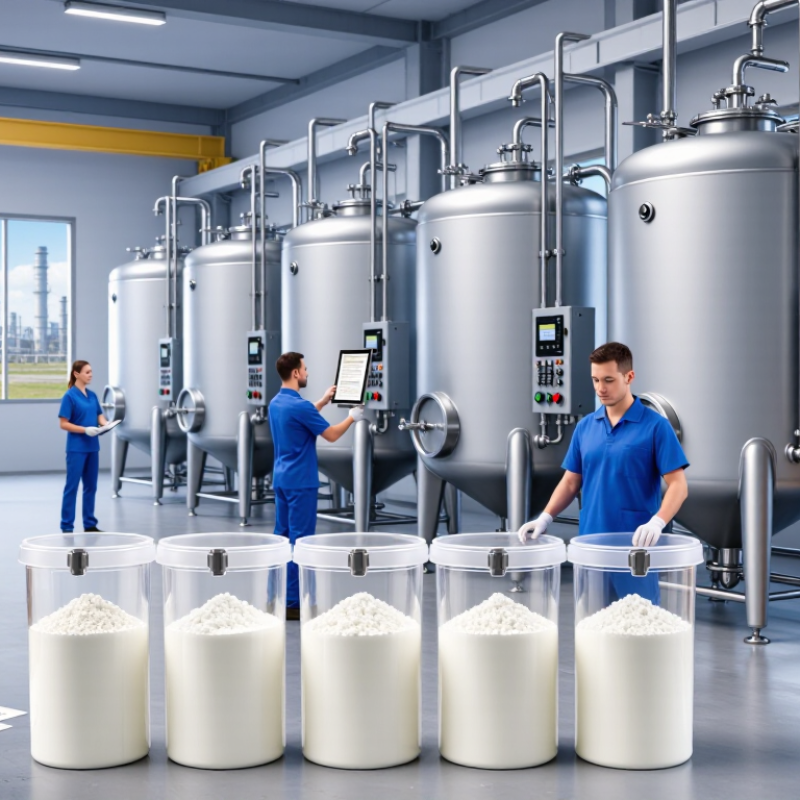
Understanding HPMC Thickeners and Their Industrial Applications
HPMC, or hydroxypropyl methylcellulose, is a cellulose ether used to control flow, water retention, and surface texture. It dissolves in cold water and forms a stable, slippery solution. Heating can trigger thermal gelation, which may reverse after cooling. These properties make grade selection more technical than simply choosing a high-viscosity powder.
In tile adhesives and cement mortars, HPMC improves open time, workability, sag resistance, and substrate wetting. Installers notice smoother troweling and fewer dry edges. Gypsum compounds also use it to support water retention and consistent setting behavior. Small dosage matters. Too much may reduce slip resistance or delay drying. In architectural coatings, HPMC helps suspend pigments and adjust application feel. It can also provide viscosity, film formation, and controlled texture in pharmaceutical and personal-care manufacturing.
Manufacturers should match substitution type, particle size, viscosity range, purity, and moisture content to the process. Water quality matters. Hard water, salts, mixing order, and shear can change hydration. A high-viscosity grade is not automatically better. It may create lumps or demand longer mixing. Real systems are less tidy. Practical evaluation should measure Brookfield viscosity, dispersion time, water retention, and final product stability. Pilot batches reveal problems that specifications can hide. When comparing suppliers in China, request batch records, technical data, safety documentation, and consistent sampling. Clear traceability supports dependable production decisions.
Key Criteria for Evaluating Chinese HPMC Manufacturers
China Top 10 HPMC Thickener Manufacturers to Buy From
When evaluating Chinese HPMC manufacturers, start with measurable production evidence. Grand View Research estimates the global cellulose ethers market will expand steadily through 2030, driven by construction materials, pharmaceuticals, and personal care. This growth increases supplier choice, but also increases quality differences. Check viscosity grades, methoxy and hydroxypropoxy substitution, moisture, particle size, and gel temperature. These values should match the technical data sheet and independent test results.
Reliability is more than an ISO certificate. Request recent batch records, certificates of analysis, retention-sample policies, and traceability from raw material to shipment. A capable factory should explain its laboratory equipment and testing frequency. For construction applications, compare mortar water retention, open time, adhesion, and sag resistance under your own conditions. For pharmaceutical use, review applicable good manufacturing practice controls and pharmacopoeial compliance. The International Pharmaceutical Excipients Council repeatedly emphasizes supplier qualification, documentation, and change control. Small details matter.
Tips: Ask for three consecutive production lots, not one perfect sample. Visit the plant or use a qualified third-party audit. Confirm annual capacity, lead time, packaging protection, and complaint response. A low price can still be the wrong price. I would also challenge unusually narrow specifications; they may look impressive but lack practical value. Review test methods carefully, because different instruments can produce different viscosity results. Supplier comparisons should be evidence-based, not catalogue-based.
China Top 10 HPMC Thickener Manufacturers to Buy From — Key Criteria for Evaluating Chinese HPMC Manufacturers
Viscosity is a key HPMC purchasing criterion because it directly affects water retention, workability, sag resistance, and thickening performance. The chart shows representative viscosity checkpoints commonly specified for HPMC products, measured in mPa·s. Buyers should verify the test concentration, temperature, spindle, and method in each manufacturer's technical data sheet before comparing suppliers.
Profiles of China’s Top 10 HPMC Thickener Manufacturers
China’s HPMC thickener sector serves construction, pharmaceuticals, food processing, and personal care. Grand View Research estimates the global cellulose ethers market reached about USD 6.8 billion in 2023. Its forecast indicates roughly 6.5% annual growth through 2030. Mordor Intelligence also identifies construction materials as a major HPMC demand area. These figures explain China’s strong manufacturing depth, but they do not prove every supplier’s quality.
Profile 1 represents an integrated producer with in-house cellulose sourcing. Profile 2 focuses on tile adhesives and cement renders. Profile 3 supplies pharmaceutical-grade HPMC with tighter impurity controls. Profile 4 serves food applications and offers controlled gel temperatures. Profile 5 specializes in high-viscosity grades for water retention. Profile 6 emphasizes fast-dispersing powders for factory efficiency. Profile 7 provides customized viscosity and moisture specifications. Profile 8 operates export-oriented production lines with multilingual documentation. Profile 9 targets small and medium buyers with flexible minimum orders. Profile 10 combines laboratory testing with application support.
A practical review should examine batch records, viscosity results, ash content, moisture, and particle size. Request recent certificates, not old marketing sheets. Ask for retained samples from the same production lot. That detail matters. Some suppliers appear strong on paper but provide weak technical follow-up. This is an uncomfortable limitation. Public rankings rarely disclose capacity utilization, complaint rates, or supply interruptions. Buyers should therefore compare audited evidence, pilot batches, and delivery performance before choosing a long-term HPMC partner.
Comparing Product Quality, Certifications, Capacity, and Pricing
China Top 10 HPMC Thickener Manufacturers to Buy From
When comparing China’s top HPMC thickener manufacturers, product quality should come before a low quotation. Request recent test reports for viscosity, moisture, ash content, particle size, and gel temperature. These figures affect mortar workability, water retention, coating stability, and final surface texture. A reliable supplier should explain its testing methods clearly. Trial samples are useful, but one successful batch proves little.
Certifications also need careful checking. Confirm the certificate number, issuing body, validity period, and covered production site. ISO 9001 can indicate controlled procedures, but it does not guarantee every batch will perform well. Review production capacity, monthly output, storage conditions, and backup equipment. Large capacity may shorten lead times, yet poor batch control can create costly variation. Pricing should include minimum order quantity, packaging, freight, testing, and technical support. The cheapest offer is rarely the cheapest delivered solution.
Tips: Ask for three consecutive batch reports. Compare the same viscosity grade under identical test conditions. Request a small production trial before signing a long-term contract. Keep written specifications and complaint procedures. I have found that supplier communication is sometimes overlooked. That can become a serious weakness. A supplier may answer quickly before purchase, then respond slowly after delivery. Build this risk into your evaluation score.
How to Choose the Right HPMC Supplier for Your Needs
Choosing among China’s top 10 HPMC thickener manufacturers requires more than comparing prices. Your application defines the right supplier. Tile adhesive needs stable water retention, while coatings may prioritize flow and surface appearance. Ask for the exact grade, viscosity range, substitution level, moisture content, and particle size. Request a current certificate of analysis and safety data sheet for every proposed grade. Do not accept vague quality claims.
Test samples in your own formula, using the same mixer, water quality, temperature, and curing schedule. Record mixing time, lump formation, open time, sag resistance, and final workability. A sample that performs well in a laboratory cup may behave differently on a job site. Check batch records, production capacity, packaging protection, and realistic lead times. Reliable suppliers explain deviations instead of hiding them. Ask how they trace raw materials and handle complaints.
Technical support matters after the purchase. Look for staff who can adjust dosage advice without forcing one standard recipe. Review factory audit options, independent testing, export documentation, and payment terms before signing. Price still matters, but unstable viscosity can create rejected batches and expensive rework. No checklist is perfect. Start small. Leave room for a trial order, because assumptions often fail at scale.
Conclusion
This article provides a practical guide to Hpmc Thickener and its wide range of industrial applications, including construction materials, coatings, detergents, pharmaceuticals, and personal care products. It explains how HPMC improves viscosity, water retention, workability, stability, and texture, helping buyers understand which product characteristics matter for different formulations. The discussion also introduces key criteria for evaluating Chinese manufacturers, such as raw material control, production technology, quality management, technical support, delivery reliability, and customization capabilities.
The article profiles ten leading types of Chinese HPMC thickener manufacturers without focusing on brand names, allowing readers to compare suppliers objectively. It examines product quality, relevant certifications, production capacity, packaging, lead times, and pricing structures. Finally, it offers a straightforward framework for selecting the right supplier based on application requirements, target performance, order volume, budget, and long-term cooperation goals. This approach helps international buyers reduce purchasing risks and make informed, efficient sourcing decisions.