Explore our certified active ingredients engineered for exceptional mildness, rich foaming profiles, and precise rheology control.
Analyzing the paradigm shift in global personal care chemistry, consumer awareness, and strict ecological mandates.
The global daily chemical industry is undergoing an unprecedented transition. Standard petroleum-based primary surfactants, such as Sodium Lauryl Ether Sulfate (SLES) and Sodium Lauryl Sulfate (SLS), are increasingly replaced or optimized with green, bio-based alternatives. At the center of this revolution are Amino Acid-Based Surfactants, recognized as the standard for next-generation skin and hair compatibility.
This evolution is primarily driven by three converging factors: modern dermatological insights, environmental safety regulations, and the rising consumer demand for "Clean Beauty". Traditional sulfate-containing surfactants possess high Critical Micelle Concentration (CMC) values and strong denaturing actions on skin proteins. This denaturing effect strips the stratum corneum of its natural intercellular lipids, raising Transepidermal Water Loss (TEWL) and leading to skin irritation and barrier disruption. Amino acid surfactants, such as Sodium Cocoyl Glutamate, Sodium Lauroyl Sarcosinate, and Sodium Cocoyl Glycinate, interact gently with keratin. This interaction maintains the skin's moisture barrier and ensures physiological pH compatibility.
Furthermore, regulatory bodies worldwide have tightened requirements for trace contaminants, such as 1,4-dioxane—a byproduct of ethoxylation processes found in conventional ethoxylated surfactants like SLES. The United States and various European nations have established strict, single-digit ppm thresholds for 1,4-dioxane in finished formulations. As a result, formulators must seek alternative pathways. In response to these changes, amino acid surfactants—synthesized from natural fatty acids and renewable plant-derived amino acids—are fully sulfate-free, biodegradable, and free from ethoxylation concerns.
| Surfactant Class | Common Types | Skin Irritancy (Zein Test value) | Biodegradability (28 Days) | 1,4-Dioxane Risk |
|---|---|---|---|---|
| Amino Acid Surfactants | Glutamates, Glycinates, Alaninates, Sarcosinates | < 50 mg N/100ml (Very Low) | > 90% (Rapidly Biodegradable) | Zero Risk (Sulfate-free) |
| Alkyl Polyglucosides (APG) | Lauryl Glucoside, Caprylyl Glucoside | < 100 mg N/100ml (Low) | > 85% (Rapidly Biodegradable) | Zero Risk (Sulfate-free) |
| Traditional Ether Sulfates | Sodium Lauryl Ether Sulfate (SLES) | > 250 mg N/100ml (Moderate to High) | 60% - 75% (Variable) | High Risk (Ethoxylated byproduct) |
A premier partner in high-purity chemical raw materials, custom manufacturing, and global distribution.
Founded in 2010, Suzhou Yuantairun Chemical Co., Ltd. (Ytrnewmaterial) has grown into a leading supplier in the daily chemical raw materials industry. We specialize in providing high-quality products and one-stop services to support our customers' R&D, production, and supply chain optimization.
Our operational framework focuses on sustainability and technological innovation. Operating from state-of-the-art facilities in Suzhou, Jiangsu Province, we run a dedicated R&D center and application testing laboratory. This capability allows us to offer custom synthesis, OEM/ODM formula validation, and contract manufacturing services to match our customers' specialized needs.
Our mission is to drive innovation and efficiency in the global daily chemical industry by providing cutting-edge solutions. With global supply chain experience, we ensure that every batch meets international quality standards. We offer raw material solutions that balance cost efficiency, process stability, and regulatory compliance.


Addressing supply chain challenges: supply security, quality variation, transport logistics, and formulation engineering.
B2B procurement officers in the personal care and detergent sectors face unique raw material challenges. When sourcing amino acid surfactants, buyers frequently encounter issues like batch-to-batch variation, high moisture content in spray-dried powders, low-temperature crystallization of liquid variants, and unpredictable logistics lead times. At Suzhou Yuantairun Chemical, we address these challenges through optimized production processes and supply chain planning.
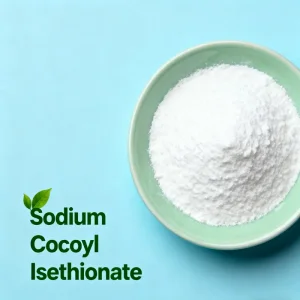
1. Purity and Moisture Control in Powdered Surfactants: For dry products, such as Sodium Cocoyl Glutamate 95% Powder or Sodium Cocoyl Isethionate 85% Powder, moisture control is essential. High moisture can lead to clumping during storage, which impacts automated dosing systems. Our facilities utilize spray-drying and crystallization processes that keep moisture levels below 5%, ensuring excellent flowability and rapid dissolution.
2. Viscosity and Solid Content Standardization in Liquid Formulations: Amino acid liquid surfactants (e.g., Sodium Cocoyl Glycinate 30% Liquid) can display viscosity fluctuations depending on ambient temperature. We incorporate stabilizers and standardize active substance content to prevent phase separation and gelation, which simplifies handling in client facilities.
3. Just-in-Time (JIT) Delivery & Regional Warehousing: To protect buyers from market volatility, we maintain buffers of raw materials and operate a global logistics network. This supply system ensures steady delivery times, helping clients minimize warehouse overhead while avoiding unexpected stockouts.
We provide a comprehensive portfolio of daily chemical raw materials, including primary surfactants, amphoterics, non-ionics, thickeners, and active botanicals.
Equipped with analytical instruments, our laboratory offers custom ODM/OEM solutions, performance evaluation, and stability testing.
By optimizing synthesis pathways and bulk-purchasing natural feedstocks, we offer stable pricing structures to buffer against raw material volatility.
Our integrated logistics network coordinates production and transport, delivering key raw materials exactly when required to support lean manufacturing.
How we help cosmetic brands, industrial chemical producers, and detergent factories succeed in their target markets.
Formulating high-end skin cleansers that target sensitive skin requires surfactants with low irritation indexes. This formulation uses Sodium Cocoyl Glutamate and Sodium Lauroyl Sarcosinate as primary surfactants. It produces a dense foam while preserving natural epidermal lipids, yielding a smooth post-wash skin feel.
Modern laundry detergents require strong soil removal, fast biodegradation, and mild skin compatibility. Combining SLES with Alpha-Olefin Sulfonate (AOS) forms a synergistic cleaning matrix. Adding Cocamide MEA (CMEA) stabilizes the formula's viscosity and supports cleaning efficiency at lower wash temperatures.
Developing high-concentration fabric softeners requires effective conditioning agents with good suspension properties. Formulations using Cetrimonium Chloride (1631 70) provide static protection and fabric softening. These ingredients remain stable in aqueous systems, supporting efficient production processes.
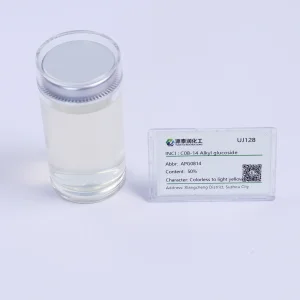
Modern consumers expect body washes that provide both strong cleansing performance and skin-conditioning benefits. Formulators achieve this by pairing amphoteric Cocamidopropyl Betaine (CAB-35) with non-ionic Lauryl Glucoside (APG1214). This combination creates a stable foam volume while remaining gentle on the skin barrier.
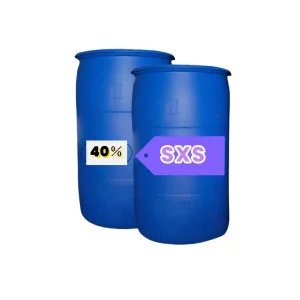
Industrial degreasing agents must rapidly emulsify stubborn hydrocarbons and particulate soil under varying water hardness levels. By utilizing Linear Alkylbenzene Sulfonate (LAS) coupled with Sodium Xylene Sulfonate (SXS-40) as a hydrotrope, formulators achieve high surfactant loading and rapid surface wetting.
From laboratory trials to industrial-scale production: tailoring chemical formulations to match your target markets.
We adjust surfactant concentrations, active ingredients, and sensory properties to match your specific market tier, from premium salons to retail channels.
We develop high-efficiency, eco-friendly liquid and powder detergents tailored to local water hardness levels and regional environmental regulations.
We provide mild, highly biodegradable surfactant blends designed for commercial facilities, restaurants, and consumer retail products.
Exploring raw material developments and green manufacturing processes for amino acid-based surfactants.
The standard synthetic route for amino acid surfactants is the Schotten-Baumann reaction. This process involves reacting fatty acid chlorides (derived from coconut, palm kernel, or vegetable oils) with amino acids (such as glycine, alanine, or glutamic acid) under alkaline aqueous conditions. While effective, conventional methods can produce trace inorganic salts (such as sodium chloride) as byproducts, which can affect the transparency and viscosity of final cosmetic formulations.
To address this, Suzhou Yuantairun Chemical is developing cleaner manufacturing processes:
1. Low-Salt Catalytic Synthesis: Our production line utilizes specialized catalysts that minimize sodium chloride formation during acyl condensation. This process produces high-purity surfactants, such as Sodium Cocoyl Glutamate 95% Powder. The resulting raw material has low salt content, which supports formulation stability and clarity in transparent gels.
2. Enzyme-Catalyzed Synthesis: Looking forward, we are researching enzyme-catalyzed synthesis pathways. This approach uses selective acylases to link fatty acids and amino acids under mild reaction temperatures. This bio-catalytic process eliminates organic solvents, reduces energy use, and yields highly pure raw materials with minimal carbon footprint.
3. Synergy with Bio-surfactants: Our R&D team is also studying the performance of amino acid surfactants blended with glycolipid biosurfactants (such as Rhamnolipids and Sophorolipids). These synergistic mixtures show excellent surface tension reduction and foaming performance at very low concentrations. This helps formulators reduce total surfactant load while maintaining washing efficiency.
Ensuring global market access through quality management and international regulatory alignment.
In the global chemical industry, regulatory compliance is essential for market access. Brands expanding across Europe, North America, and the Asia-Pacific region must ensure all formulation ingredients meet local safety and environmental requirements. Suzhou Yuantairun Chemical manages regulatory compliance across our product lines to support our clients' international business.
Our raw materials align with key global standards, including:
Practical answers to technical questions about formulation stability, viscosity control, and processing.
Explore additional raw materials designed to optimize foaming properties, rheology, and skin-conditioning benefits.