Explore our foundational range of surfactants, stabilizers, and functional ingredients


A Comprehensive Study on CAS: 65381-09-1 as a Clean-Label Emollient, Solvent, and Delivery Matrix
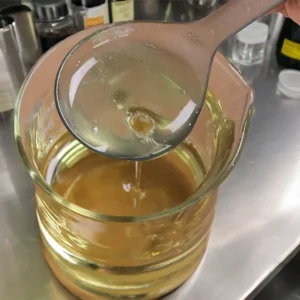
Caprylic/Capric Triglyceride (CAS 65381-09-1), frequently classified alongside and cross-referenced with CAS 73398-61-5, represents a specialized mixed triester derived exclusively from glycerin and medium-chain fatty acids, specifically caprylic (octanoic, C8) and capric (decanoic, C10) acids. Commonly extracted via the fractionation of coconut or palm kernel oil, this polar lipid matrix is engineered to exclude unsaturated fatty acids, yielding a remarkably stable, oxidatively inert base fluid.
Unlike natural unrefined vegetable oils, which are rich in long-chain unsaturated triglycerides prone to rancidity and sensory heaviness, Caprylic/Capric Triglyceride delivers a fully saturated structure. The precise control over the C8 to C10 carbon-chain distribution (typically engineered to a 60:40 or 70:30 ratio) dictates its viscosity, spreading coefficient, and solvent power.
| Analytical Parameter | Typical Specification Range | Methodology / Standard |
|---|---|---|
| Appearance | Clear, colorless, virtually odorless liquid | Visual Inspection |
| Acid Value (mg KOH/g) | ≤ 0.10 | AOCS CD 3d-63 |
| Saponification Value (mg KOH/g) | 325 – 345 | AOCS CD 3-25 |
| Iodine Value (g I₂/100g) | ≤ 0.50 | AOCS CD 1-25 |
| Viscosity (20°C, mPa·s) | 25.0 – 33.0 | ASTM D445 / Ubbelohde |
| Moisture Content (%) | ≤ 0.05 | Karl Fischer (AOCS Ca 2e-84) |
| Refractive Index (nD20) | 1.440 – 1.452 | Refractometry |
Understanding the thermodynamic and rheological behavior of CAS 65381-09-1 is critical for formulating stable emulsions and high-performance cleansers. It operates through three main mechanisms:
The medium-chain length of Caprylic/Capric Triglyceride imparts high polarity compared to hydrocarbons like mineral oil. This makes it an exceptional solvent for UV filters (such as Avobenzone and Ethylhexyl Triazone) and oil-soluble active ingredients (like Retinol, Tocopherol, and Ceramides), preventing crystallization in emulsions.
By mimicking the skin’s natural sebum components without blocking pores, it deposits a breathable, non-occlusive film over the stratum corneum. This reinforces the lipid barrier and reduces Transepidermal Water Loss (TEWL) while offering a dry, silky skin-feel.
In cleansing oils and makeup removers, it rapidly dissolves stubborn, hydrophobic substances such as polymeric silicones, long-wear waxes, and metal oxide colorants. Its low surface tension facilitates quick emulsification and clean rinsing without leaving a greasy residue.
Formulation demands vary by geography, climate, and consumer demographics. Here is how Caprylic/Capric Triglyceride (CAS 65381-09-1) is adapted across regional consumer profiles:
The industrial synthesis of CAS 65381-09-1 is transitioning to meet carbon-neutral and biotech-driven standards. The traditional route relies on high-temperature chemical esterification under vacuum, using metallic catalysts. While efficient, this pathway is energy-intensive.
The next-generation production roadmap focuses on Enzymatic Esterification. By utilizing immobilized lipases (such as Candida antarctica lipase B) as biocatalysts, the reaction occurs at much lower temperatures (typically 55°C – 65°C) with highly targeted specificity. This process significantly reduces waste and eliminates the need for harsh chemical refining, yielding an ester with lower odor, lighter color, and zero residual catalyst trace.
Additionally, the transition from conventional palm-derived feedstocks to microalgae-sourced lipids and synthetic biology platforms is under active development. This will decouple the supply chain from agricultural land pressures, establishing a direct path to carbon-negative production.
The global market for medium-chain triglycerides (MCTs) in personal care and pharmaceuticals is seeing robust growth, driven by the clean beauty movement and the phasing out of petrochemical bases. Market studies indicate a compound annual growth rate (CAGR) of over 6.2% for green emollients, with Caprylic/Capric Triglyceride leading in volume consumption.
Industrial scale is concentrated around regions with direct access to basic tropical oils (such as Malaysia and Indonesia) and advanced refining centers (such as China and Western Europe). The integration of refining facilities with downstream esterification plants has become the standard for achieving the cost efficiencies required by global consumer brands.
Suzhou Yuantairun Chemical Co., Ltd. operates at the intersection of geographical raw material advantages and advanced process engineering. The resilience of our supply chain and manufacturing efficiency provides global buyers with distinct operational benefits:
For multinational brands, regulatory compliance is non-negotiable. Caprylic/Capric Triglyceride supplied by Ytr Chemical meets all major international regulatory frameworks:
| Regulatory Framework | Status / Compliance | Application & Relevance |
|---|---|---|
| EU REACH | Fully Registered | Allows unrestricted importation and distribution across the European Economic Area. |
| China NMPA | Listed in IECIC | Approved for use in domestic and imported cosmetics without restriction. |
| US FDA | GRAS (Generally Recognized as Safe) | Certified for cosmetic, topical pharmaceutical, and food-contact formulations. |
| RSPO Certification | Available (Mass Balance / Segregated) | Ensures raw materials support sustainable palm oil production and prevent deforestation. |
| Halal & Kosher | Certified Grades Available | Meets strict dietary and purity standards for diverse consumer markets. |
Connect with our engineering team to request sample kits, certificates of analysis (COA), or optimization advice for your formulations.
Request Technical SupportDiscover our thickeners, mild foaming agents, and active conditioners