High-Quality Cationic Emulsifiers Exporter & Exporters

Empowering Global Formulators with High-Performance Specialty Surfactants, Advanced Cationic Condensation chemistry, and Sustainable Sourcing Solutions.

Featured Cationic & Amino Acid Surfactants

Explore our top-tier, clinically-tested raw materials engineered to improve compatibility, viscosity control, and mildness in advanced formulations.
Industrial Landscapes & Global Status of Cationic Emulsifiers

Understanding the molecular role, regulatory landscape, and performance mechanics of cationic structures in B2B chemical procurement.

Cationic emulsifiers are characterized by their positively charged hydrophilic head groups, typically consisting of quaternary ammonium salts, tertiary amines, or esterquats. In contrast to anionic surfactants, which carry a negative charge, cationic compounds show a high affinity for negatively charged surfaces. This includes keratinous substrates such as human hair and skin, as well as natural and synthetic textile fibers. This electro-chemical attraction allows them to form thin, uniform, mono-molecular films that reduce static charge, smooth physical textures, and prevent moisture loss.

Information Gain Insight: The global transition towards sustainable chemistry is reshaping the synthesis of cationic emulsifiers. Traditional quaternary ammonium compounds (such as Cetrimonium Chloride and Behentrimonium Chloride) are increasingly evaluated alongside biodegradable esterquats and lipid-derived amines. This shift is driven by stringent environmental standards regarding aquatic toxicity and bioaccumulation potentials. Suzhou Yuantairun Chemical is at the forefront of this transition, offering high-purity solutions that meet global regulatory criteria while maintaining emulsification stability.

In industrial systems, cationic emulsifiers serve as essential components in the formulation of stable oil-in-water (O/W) emulsions. They are widely used in hair conditioners, skin creams, fabric softeners, and industrial coatings. The cationic charge ensures excellent deposition on substrates, delivering conditioning properties that cannot be replicated by anionic or non-ionic alternatives. However, formulating with cationic surfactants requires strict control over pH, ionic strength, and ingredient compatibility, as mixing them directly with anionic surfactants can cause precipitation or phase separation without proper structuring agents.

Primary Classification of Cationic Emulsifiers in Industrial Use

Modern industrial emulsifiers are grouped into three primary chemical families, each tailored to specific performance requirements:

  • Alkyl Ammonium Halides: Including DDBAC (Dodecyl Dimethyl Benzyl Ammonium Chloride) and Cetrimonium Chloride, known for their strong antimicrobial action and conditioning efficiency.
  • Esterquats: Commonly used in household fabric softeners due to their rapid biodegradation profiles.
  • Amine Oxides: Such as Lauryl Dimethylamine Oxide (DDAO) and Myristyl Dimethylamine Oxide. These function as non-ionic surfactants in neutral or alkaline pH, but exhibit cationic characteristics in acidic systems, offering excellent foam stabilization and conditioning.

Manufacturing and Supply Chain Efficiency in China

How Suzhou Yuantairun Chemical leverages advanced synthesis, precise quality control, and localized logistics to support global formulations.

High-Yield Synthesis Lines

Our facilities utilize automated alkoxylation and quaternization reactors. This ensures consistent batch-to-batch molecular weight distribution, low residual free amines, and optimal active matter concentration.

Optimized Production Costs

By integrating upstream raw materials (such as fatty alcohols and tertiary amines) and leveraging local logistics networks in Jiangsu, we provide high-grade specialty chemicals at competitive price points.

Global Compliance and Quality

Our products undergo rigorous chromatography (HPLC/GC) and wet chemistry testing. We supply REACH-compliant, low-VOC raw materials that align with major global cosmetics and industrial chemical regulations.

Suzhou Yuantairun Chemical Co., Ltd.

Founded in 2010, Suzhou Yuantairun Chemical Co., Ltd. has developed into a leading supplier in the daily chemical raw materials industry. We provide high-quality products and one-stop supply chain services to support our global partners in research and development, production, and process optimization.

Our mission is to drive innovation and efficiency in the global chemical industry by providing tailored solutions. From advanced hair conditioning agents to eco-friendly home care emulsifiers, our R&D lab works closely with clients to resolve stability and compatibility challenges.


2010
Established Year
7000+
Cooperative Partners
100%
Quality Assurance
Yuantairun Factory Facility
Lab Testing R&D Equipment

Targeted Application Scenarios & Formulations

Discover how our cationic agents and premium surfactants are optimized for specific commercial applications.

Gentle Amino Acid Facial Cleanser

Features Sodium Cocoyl Glutamate (YG02-95) and Sodium Lauroyl Sarcosinate (LS-100N) for ultra-mild cleansing. The natural amino-acid based surfactants produce fine, easy-to-rinse foam while retaining essential skin moisture. Ideal for sensitive skin formulations.

Concentrated Fabric Softener Production

Utilizes cationic surfactant 1631 70 (Cetrimonium Chloride) for enhanced fabric softness and anti-static properties. Supports concentrated, cold-water washing formulas to reduce packaging and transportation costs.

High-Foaming Shower Gel Formulation

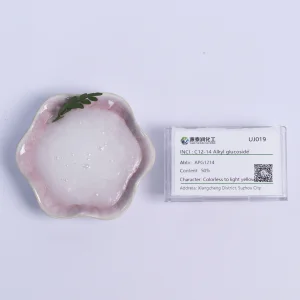
Combines amphoteric CAB-35 (Cocamidopropyl Betaine) and non-ionic APG1214 (Lauryl Glucoside) to generate a rich, low-residue lather. Free of sulfates to minimize skin dryness.

High-Efficiency Eco-Friendly Laundry Detergent

Uses SLES and AOS as core anionic surfactants for superior detergency, coupled with thickener CMEA for optimal viscosity. Formulated to reduce skin irritation while maintaining high cleaning performance.

Industrial Heavy-Duty Degreaser

Powered by LAS and solvent EGDS for rapid breakdown of heavy industrial grease on machinery. Highly concentrated, biodegrades efficiently, and meets strict industrial wastewater regulations.

Customization Capabilities (ODM & OEM)

We offer tailormade formulations for specific applications, including variable packaging sizes, pH adjustments, active content optimization, and fragrance compatibility.

Customized Product Solutions

Custom solutions designed to meet the performance, packaging, and regulatory requirements of your target market.

Shampoo & Shower Gel Customization

Shampoo & Shower Gel Services

Tailored for retail brands, hotels, and professional salons. We adjust foaming properties, viscosity, and conditioning performance to match your specific price points.

Explore Solutions
Laundry Detergent Customization

Laundry Detergent Formulas

Fragrance stability, enzyme integration, and packaging dimensions can be adjusted to meet regional requirements for household fabric cleaners.

Explore Solutions
Hand Soap Customization

Hand Wash Formulations

Mild amino-acid surfactant structures combined with moisturizers to ensure gentle cleansing for commercial malls, dining venues, and general retail markets.

Explore Solutions

Need Customized Surfactants or Emulsifiers?

Connect with our engineering lab and global export team today. Receive samples, technical datasheets (TDS), and safety datasheets (SDS) tailored to your manufacturing needs.

Submit Inquiry Now

Technical Bulletins & Product Updates

Stay updated on our latest lab achievements, chemical syntheses, and newly introduced surfactant profiles.

March 06, 2026

Runtec®SCI85: Mild Anionic Surfactant

Runtec®SCI85 features a high active ingredient content. It exhibits excellent compatibility and creates a gentle, refreshing skin feel in premium formulas.

Read More
February 02, 2026

Runtec®SCA-30: Sodium Cocoyl Alaninate

Designed specifically for shampoos. This oil-resistant amino acid surfactant provides excellent foaming dynamics even in the presence of sebum.

Read More
January 31, 2026

Cetyl Ethylhexanoate: Synthetic Esters

A skin moisturizer modeled after seabird feather oil. Compatible with various cosmetic lipids, it features strong pigment dispersing properties.

Read More

Technical FAQ: Cationic Emulsifiers & Surfactant Systems

Addressing common formulation challenges, safety profiles, and molecular interactions in B2B applications.

What causes incompatibility between cationic emulsifiers and anionic surfactants?
Cationic and anionic surfactants carry opposite charges. When mixed in aqueous solutions, their head groups attract electrostatically, leading to the formation of an insoluble, hydrophobic salt complex. This complex precipitates out of solution, destroying the emulsion structure and foaming capacity. To combine them, formulators must use non-ionic or amphoteric stabilizers, or use specialized polymeric emulsifiers to structurally shield the charges.
How do amine oxides like DDAO behave under different pH levels?
Amine oxides are pH-sensitive amphoteric surfactants. In neutral and alkaline environments (pH > 7), they carry no charge and behave like non-ionic surfactants. Under acidic conditions (pH < 3-5), the nitrogen atom protonates, giving the molecule a positive charge. In this state, it behaves like a cationic surfactant, offering enhanced conditioning, antistatic properties, and binding affinity to negatively charged surfaces.
Why is Cetrimonium Chloride widely used in hair care formulations?
Cetrimonium Chloride (typically supplied as 1631) features a 16-carbon alkyl chain attached to a quaternary ammonium head. Hair fibers possess a net negative charge, which becomes more pronounced with chemical damage or washing. The positively charged head group of Cetrimonium Chloride bonds to the hair shaft, leaving the hydrophobic tail oriented outward. This creates a lubricating monolayer that reduces wet combing friction, controls static, and increases hair shine.
What are the environmental storage considerations for bulk export of cationic liquids?
Many cationic surfactants and amine oxides form liquid crystalline phases or gel states when exposed to low temperatures. During transit and storage, they should ideally be maintained between 15°C and 35°C. Exposure to extreme cold can cause phase separation or precipitation of the active matter. If frozen, the materials must be gently heated and stirred thoroughly to restore a homogeneous liquid state before use in formulations.
Are esterquats superior to alkyl quaternary ammonium compounds?
From an ecological perspective, yes. Esterquats contain ester linkages within their hydrophobic hydrocarbon chains. These linkages are easily cleaved by environmental microorganisms, leading to rapid biodegradation and lower toxicity to aquatic life. However, from a structural stability standpoint, esterquats are prone to hydrolysis in aqueous formulations outside the optimal pH range (typically pH 3.0 to 4.5). Alkyl quats (like Cetrimonium Chloride) offer superior chemical stability across a wider pH range, making them easier to formulate.

More High-Performance Raw Materials

Broaden your formulation portfolio with these specialized cosmetic stabilizers, thickeners, and mild surfactants.