Premium raw materials and specialized surfactants optimized for superior cosmetic and industrial performance.
Analyzing supply dynamics, shifting regulatory standards, and the chemistry behind microbial preservation.
In modern formulation chemistry, preservation remains the critical shield between consumer safety and microbial spoilage. Among the most trusted, extensively researched, and globally validated preservative systems, sorbates—comprising Sorbic Acid and its highly soluble counterpart, Potassium Sorbate—occupy a central role. Originally isolated from the unripe berries of the rowan tree (Sorbus aucuparia), sorbates are now synthesized at an industrial scale to satisfy demanding requirements across the food, beverage, personal care, and pharmaceutical sectors.
Sorbates are globally recognized as safe (GRAS) by the US FDA (21 CFR 182.3089 & 21 CFR 182.3640) and are approved for food use in the European Union under numbers E200 and E202. As the regulatory pressure on controversial preservation systems (such as parabens, formaldehyde donors, and isothiazolinones) increases, sorbates have emerged as the industry-standard alternative for formulations seeking green, mild, and non-irritating profiles.
The global market for sorbate preservatives is driven by three main factors: the clean label movement, the expansion of high-water-activity formulations, and the rising demand for extended shelf lives in globalized supply chains. Today's B2B procurement professionals look for suppliers who provide more than just raw materials; they require partners who offer transparent technical dossiers, low trace-impurity levels, consistent physical forms (dust-free granules vs. powders), and robust compliance with international pharmacopeias (USP, FCC, EP, BP).
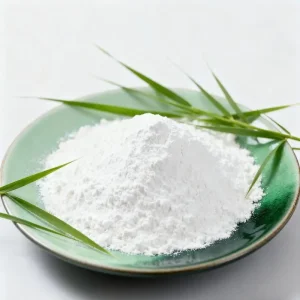
Advanced crystallization structures limit undesirable reaction by-products, ensuring low odor, low color, and minimal impact on sensory profiles.
Fully compliant with E200, E202, Kosher, Halal, ISO 9001, and ISO 22000 criteria, passing strict audits for worldwide entry.
Potassium Sorbate offers high water solubility (over 58% at 20°C), making it easy to incorporate into water-based liquid formulations.
Understanding the molecular pathway of microbial control and pH-dependent performance.
Sorbic acid is a straight-chain, unsaturated fatty acid (2,4-hexadienoic acid). Its antimicrobial activity relies on its undissociated state. When dissolved in aqueous media, an equilibrium is established between the undissociated sorbic acid and the sorbate anion. The position of this equilibrium is dictated by the system's pH relative to the pKa of sorbic acid, which is 4.76.
Only the undissociated, lipophilic sorbic acid molecule can freely cross the lipid bilayer of microbial cell membranes. Once inside the cytoplasm (which typically maintains a neutral pH), the molecule dissociates, releasing hydrogen ions (protons) and sorbate anions. This accumulation of protons lowers the internal pH of the cell. The cell is then forced to expend significant energy (ATP) to pump the excess protons out via ATPase pumps, eventually exhausting its metabolic reserves. Additionally, the sorbate anion disrupts the cell's metabolic enzymes (including the citric acid cycle enzymes and sulfhydryl groups) and inhibits nutrient transport across the membrane.
| Target Pathogen Class | Common Species Inhibited | Minimum Inhibitory Concentration (MIC) Range | Optimal pH Spectrum |
|---|---|---|---|
| Yeasts | Saccharomyces cerevisiae, Candida albicans | 0.005% - 0.05% | pH 4.0 - 5.5 |
| Molds | Aspergillus niger, Penicillium chrysogenum | 0.01% - 0.1% | pH 4.5 - 6.0 |
| Bacteria (Gram-Negative) | Pseudomonas aeruginosa, Escherichia coli | 0.1% - 0.2% (Moderate efficacy) | pH 4.0 - 5.0 |
| Bacteria (Gram-Positive) | Staphylococcus aureus, Bacillus subtilis | 0.05% - 0.15% | pH 4.0 - 5.5 |
As shown in the table, sorbates are highly effective against yeasts and molds, but show lower activity against bacteria. To achieve broad-spectrum preservation, formulators use a hurdle technology approach. This involves pairing sorbates with other organic acids (such as Sodium Benzoate or Salicylic Acid) or combining them with chelating agents like EDTA and modern surfactants.
Combining domestic raw material integration, advanced quality systems, and global logistical networks.
Suzhou Yuantairun Chemical Co., Ltd. is a leading supplier in the daily chemical raw materials industry. We utilize China's advanced chemical manufacturing base to offer high-quality sorbate preservatives with competitive pricing, strict quality control, and secure logistics.
China produces more than 70% of the world's sorbates. This leadership is built on raw material integration. Sorbic acid synthesis relies on the reaction of crotonaldehyde and ketene in the presence of catalyst systems. Chinese chemical manufacturing clusters group these upstream petrochemical precursors close to crystallization and purification units. This integration reduces transportation costs, insulates buyers from raw material volatility, and minimizes the carbon footprint of production.
We manage upstream chemical integrations alongside modern, automated post-crystallization processes. Our modern factories use vacuum-distilled refining lines that eliminate secondary amine impurities and low-molecular-weight degradation components. This process produces high-purity Potassium Sorbate with low color and odor, designed specifically for cosmetic and personal care applications.
Additionally, our quality control lab is equipped with advanced HPLC, gas chromatography (GC), and atomic absorption spectroscopy (AAS) systems. This ensures that every export batch meets global heavy metal limits (Lead ≤ 2 ppm, Arsenic ≤ 2 ppm) and satisfies the criteria of USP-NF, FCC, and EP.
How sorbate preservatives integrate into daily chemical formulations, personal care lines, and food systems.
Preservation is not a one-size-fits-all solution. Sorbate integration requires an understanding of the local water profile, the formulation's surfactant matrix, and the final packaging design. Below, we examine the primary commercial applications of sorbates and how they coordinate with related chemical raw materials:
In personal care formulations—such as baby shampoos, shower gels, and facial cleansers—mildness is key. Modern formulations are moving away from traditional sulfates toward amino acid-based surfactants (like *Sodium Methyl Cocoyl Taurate*, *Sodium Lauryl Methoxypropionate*, and *Sodium Lauroyl Oat Amino Acids*). Potassium Sorbate is a preferred preservative for these systems.
In these formulations, Potassium Sorbate is typically used at concentrations between 0.1% and 0.5%. Because amino acid surfactants function best around pH 5.0 to 5.5, the preservative remains active and stable without causing irritation or formulation cloudiness.
Skin care products formulated with emulsifiers like *Glyceryl Stearate and PEG-100 Stearate* require protection in both the oil and water phases. Sorbic acid has a partition coefficient ($K_o/w$) of approximately 3.0. This means it can distribute between the aqueous phase and the lipid phase to prevent microbial growth at the phase interface.
In these systems, formulators pair sorbates with *Phenoxyethanol* and chelating agents like *EDTA Disodium*. The EDTA destabilizes bacterial cell walls by binding divalent cations ($Ca^{2+}$, $Mg^{2+}$), which allows Potassium Sorbate to cross the cell membrane more easily and provide effective preservation.
In household detergents, laundry liquids, and fabric softeners (which utilize cationic surfactants like *Cetrimonium Chloride*), microbial stability is crucial for long shelf lives. Using Potassium Sorbate prevents the growth of molds and yeasts in the bottle head space, which can be caused by temperature changes during storage.
Addressing supply chain risks, dusting hazards, and physical form selection for international buyers.
B2B sourcing directors face three main challenges when purchasing sorbates: mechanical dust hazards, color degradation, and supply chain logistics.
1. Mechanical Dust and Industrial Safety: Traditional powder-form Potassium Sorbate can create airborne dust during charging and mixing. This dust is a respiratory irritant and can pose a dust explosion risk in high-volume plants. Consequently, global manufacturers are transitioning to spherical or columnar extruded granules. These dust-free granules flow easily, dissolve rapidly in water, and improve workspace safety.
2. Yellowing and Thermal Stability: Sorbates contain conjugated double bonds that can oxidize over time, causing white powders to turn yellow. Exposure to oxygen, heat, and trace metal impurities speeds up this degradation. Sourcing from Suzhou Yuantairun ensures that your products are packaged in high-barrier containers (using PE lining with aluminum foil barriers) to block oxygen and UV light, keeping the material stable during long transit times.
3. Just-in-Time Logistics: In the current shipping environment, reliable logistics are essential. Suzhou Yuantairun's facilities near major shipping hubs allow for flexible container loading, combined shipping of surfactants and preservatives, and efficient customs clearance. This helps reduce lead times and warehousing costs for our customers.
Get in touch with our technical team today to request high-purity samples, customized formulation advice, or up-to-date pricing data.
Submit Sourcing InquiryExpert answers to common questions about chemistry, compatibility, and international logistics.
This discoloration is usually caused by the oxidation of the conjugated double bonds in the sorbic acid molecule. This reaction can be triggered by exposure to UV light, elevated processing temperatures, or trace transition metal ions (such as iron or copper) present in the water supply. To prevent yellowing, use chelating agents like EDTA Disodium, incorporate UV absorbers, keep processing temperatures below 60°C, and ensure raw materials have low trace metal levels.
Sorbate efficacy is highly dependent on pH because only the undissociated form can cross microbial membranes. At pH 4.76 (the pKa), 50% of the sorbate is active. At pH 6.0, only about 5.5% is active. If your formulation's pH is between 5.5 and 6.0, you must increase the dosage (up to the regulatory limit of 0.5% in cosmetics) or pair it with organic acids or co-preservatives like Phenoxyethanol to maintain effective preservation.
The main difference is solubility. Sorbic Acid has low solubility in cold water (0.16% at 20°C), making it difficult to use in concentrated aqueous formulations. Potassium Sorbate dissolves easily in water (over 58% at 20°C). For most water-based formulations, it is best to dissolve Potassium Sorbate first and then adjust the pH down to liberate the active sorbic acid.
Yes. Potassium Sorbate is listed as an approved synthetic preservative by EcoCert and Cosmos for natural and organic cosmetic products. This is because it is identical to the natural molecule and has a favorable environmental profile, biodegrades easily, and does not bioaccumulate.
Our standard packaging is 25 kg net weight cardboard boxes or multi-layer paper bags containing PE inner liners. For bulk shipments, we can supply 500 kg or 1000 kg super-sacks with anti-static protection. Every shipment is palletized and shrink-wrapped with desiccants to prevent moisture absorption during transit.
Explore our complete range of high-purity chemical bases, preservatives, and conditioning agents.