Direct manufacturer supplies designed to elevate product stability, safety profiles, and shelf-life efficiency.
An in-depth analysis of chemical synthesis, dynamic sustained-release chemistry, safety profiles, and optimization within modern preservative systems.
| Property Parameter | Technical Specification Value | Scientific Definition & Significance |
|---|---|---|
| Chemical Name | 1,3-Bis(hydroxymethyl)-5,5-dimethylimidazolidine-2,4-dione | IUPAC nomenclature indicating structural makeup. |
| CAS Registry Number | 6640-58-0 | Unique global chemical identifiers for compliance checking. |
| Molecular Formula | C7H12N2O4 | Determines stoichiometric density and molecule mass. |
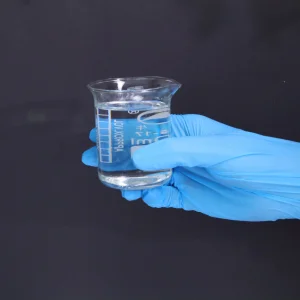
| Appearance | Clear, colorless to pale yellow viscous liquid | Ensures no optical discoloration of formulated products. |
| Free Aldehydes (Formaldehyde) | < 0.1% (Low Free Aldehydes Grade) | Minimizes skin irritation risks and maximizes regulatory clearance. |
| Active Matter (Content) | 55.0% - 58.0% | Ensures standard dosing concentrations across target products. |
| pH Value (Direct) | 6.5 - 7.5 | Neutral pH profile allows seamless integration without system shock. |
Unlike rapid-action biocides that can quickly deplete, DMDM Hydantoin functions as a formaldehyde sustained-release agent. Structurally, the hydantoin ring is bound with two hydroxymethyl groups. In an aqueous solution, a chemical equilibrium is established. The molecule slowly and continuously releases trace amounts of free formaldehyde into the water phase.
This released free formaldehyde targets microbial cell walls, penetrating the membrane to cross-link with cell proteins and nucleic acids (DNA/RNA). This disrupts the reproductive cycle of bacteria, yeasts, and molds. Because the release rate is controlled by the chemical equilibrium, the active concentration of formaldehyde remains extremely low at any given time—typically only a few parts per million (ppm). This is highly effective against microbes, yet gentle enough to minimize skin sensitization.
The primary advantage of DMDM Hydantoin is its exceptional efficacy against Gram-negative bacteria (such as Pseudomonas aeruginosa, a common contaminant in aqueous cosmetics) and Gram-positive bacteria (like Staphylococcus aureus).
While it provides reliable baseline control against yeasts and fungi, formulators often combine DMDM Hydantoin with IPBC (Iodopropynyl Butylcarbamate) or parabens to achieve complete, synergistic broad-spectrum protection. This ensures compliance with challenging microbial challenge tests (like USP <51> or EP standards) even in high-humidity conditions.
Ensuring that chemical sourcing aligns with local regulatory restrictions and meets clean-beauty compliance thresholds.
Under EU Regulation (EC) No 1223/2009, DMDM Hydantoin is permitted at a maximum concentration of 0.6% in finished products. Products containing released formaldehyde above 0.001% (10 ppm) must be labeled "contains formaldehyde" under updated EU rules. Our low free aldehyde grade helps formulations stay within safety margins, simplifying label compliance.
Suzhou Yuantairun Chemical is fully aligned with China's Safety and Technical Standards for Cosmetics (2015 edition). Our product is registered and completely traceable, ensuring smooth import customs and regulatory clearance for international cosmetic brands manufacturing in or exporting to China.
DMDM Hydantoin is highly water-soluble and does not bioaccumulate in aquatic systems. It degrades quickly into non-toxic components in wastewater treatment processes, supporting eco-friendly product claims for green rinse-off products and household detergents.
Suzhou Yuantairun Chemical Co., Ltd. combines advanced manufacturing technology with efficient logistical routes to deliver global-grade raw materials.
At our Suzhou facility, we use automated reactor systems to control temperature, raw material feeds, and reaction times. This precise control ensures consistent conversion rates, leaving minimal residues and keeping free formaldehyde levels consistently low. Every batch is verified using advanced HPLC and gas chromatography systems.
Located near the Port of Shanghai, we offer significant shipping advantages, reducing transport times and carbon footprints. We support flexible shipping options, including FCL, LCL, and ISO tanks, backed by reliable supply networks to prevent production delays.
Practical formulation blueprints demonstrating how DMDM Hydantoin works alongside other surfactants for maximum stability and performance.
Role of Preservative: Protects high-water-content liquid laundry detergents from bacterial degradation during storage and use.
Surfactant Synergy: Works alongside SLES (Sodium Laureth Sulfate) and AOS (Sodium Alpha-Olefin Sulfonate) to ensure stable foam profiles and reliable cleaning performance. Formulated with CMEA (Cocamide MEA) to achieve target viscosity, even under fluctuating temperature conditions.
Role of Preservative: Preserves mild formulas that are susceptible to microbial contamination due to their near-neutral pH.
Surfactant Synergy: Pairs with Sodium Cocoyl Glutamate and Sodium Lauroyl Sarcosinate. The low free aldehyde content helps maintain the formula's mild, low-irritation profile, which is crucial for sensitive skin and clean beauty standards.
Role of Preservative: Ensures microbiological stability in warm, humid bathroom environments.
Surfactant Synergy: Combines amphoteric CAB-35 (Cocamidopropyl Betaine) and non-ionic APG1214 (Lauryl Glucoside). This combination produces a rich, stable lather while remaining gentle on the skin, supported by thickeners like Xanthan Gum to ensure long-term physical stability.
Ensuring that our chemical ingredients originate from sustainable, well-managed resources while delivering comprehensive service.
We offer a complete range of daily chemical raw materials—including surfactants, conditioning agents, and preservatives—simplifying your supply chain and reducing procurement complexity.
Our laboratory provides formulation design, compatibility testing, and microbiological challenge testing (USP/EP) to help you optimize preservation performance and accelerate time-to-market.
With optimized production planning and strong shipping partnerships, we ensure reliable delivery of raw materials to keep your production lines running smoothly.
Customized product systems designed to meet specific regulatory, aesthetic, and performance requirements.
We customize preservative and surfactant combinations based on your specific application environment, such as hotels, professional salons, or retail. We offer flexible packaging options and tailored price points to suit your needs.
We provide options for customizing fragrance profiles, formulation concentrations, and packaging formats, ensuring compatibility with regional water hardness levels and washing machine types.
Highly stable, cost-effective formulations designed for high-traffic environments, including shopping malls, office buildings, and restaurants, that meet strict microbial safety standards.
Direct answers to common questions about formulation safety, compatibility, and international shipping.
Contact our sales and technical support team today for bulk pricing, customized formulation advice, and samples for evaluation.
Stay up-to-date with the latest product developments and industry trends from Suzhou Yuantairun Chemical.
Discover how Runtec® SCI85 delivers a gentle, refreshing cleanse, making it ideal for premium, sulfate-free cosmetic and personal care formulas.
An in-depth look at Sodium Cocoyl Alaninate, a mild, oil-resistant surfactant that produces rich foam and leaves hair feeling soft and clean.
Exploring the application of Cetyl Ethylhexanoate as a safe, lightweight moisturizing ester that mimics natural oils in skin care formulations.
High-purity raw materials sourced directly from our manufacturing facilities to support your formulation needs.