High-purity surfactants, fatty acid esters, and rheology modifiers engineered to deliver exceptional viscosity control, microstructural stability, and superior skin feel.

An authoritative analysis of rheological science, structural requirements, and raw material logistics in modern emulsion formulations.
The global skincare market is witnessing a fundamental shift from simple hydration formulations to bio-active, multi-functional emulsions. At the heart of this transition lies the science of rheology modification. Cream thickeners do not merely increase viscosity; they govern the microstructural integrity, emulsion stability, phase separation thresholds, and sensory dynamics (including skin absorption feel, spreadability, and play-time) of premium cosmetic creams.
As major global cosmetic manufacturers transition away from microplastic-based synthetic polymers (such as traditional carbomers and cross-linked polyacrylates) due to tightening environmental regulations, the demand for natural-derived, biodegradable, and sustainable thickening agents has surged. The global market for cosmetic rheology modifiers is projected to exceed USD 3.8 billion by 2030, driven by the clean beauty movement in North America, stringent REACH regulations in Europe, and the expansion of functional skincare in the Asia-Pacific region.
Preventing coalescence, flocculation, and creaming of suspended oil droplets by forming structured elastic networks in the continuous aqueous phase.
Modulating shear-thinning (pseudoplastic) behaviors so that thick creams glide effortlessly upon application and absorb without leaving a sticky residue.
Supplying ECOCERT and COSMOS-approved amino acid derivatives and non-ionic plant esters to meet the global demand for sustainable skincare formulations.
Decoding the physical and chemical characteristics of modern rheological modifiers and stabilizers.
Achieving a stable, luxuriously textured cream requires a synergistic combination of primary emulsifiers, co-emulsifiers, and aqueous thickeners. As a premier raw material supplier, Suzhou Yuantairun Chemical Co., Ltd. customizes molecular solutions across multiple critical categories:
Ingredients like Sodium Stearoyl Glutamate (CAS 38517-23-6) represent the pinnacle of modern bio-mimetic emulsification. Operating as anionic emulsifiers with high compatibility, they form liquid crystalline structures (lamellar gel networks) in the water-oil interface. This mimics the skin’s natural lipid barrier, providing deep hydration while reinforcing the emulsion's thermal and chemical stability across varying pH ranges.
Traditional alkanolamides are increasingly replaced by safer, high-efficiency thickening agents. Cocamide MIPA (CAS 68333-82-4) and Coconut Methyl Monoethanolamide (CMMEA, CAS 866889-75-0) act as outstanding viscosity builders and foam stabilizers. When formulated in rinse-off cleansing creams or body washes, they generate rich, creamy textures without the risk of releasing restricted secondary amines (DEA-free). Additionally, nonionic alkyl polyglycosides, such as Lauryl Glucoside (CAS 110615-47-9), act as mild primary cleaning agents and structural gelling aids.
For systems that require high transparency and electrolyte tolerance, associative thickeners like PEG-150M (CAS 130249-48-8) create a three-dimensional network by hydrophobic association with other formulation ingredients. This provides outstanding suspension properties, allowing the formulation of active ingredients, physical UV filters, or pearlescent pigments without precipitation.
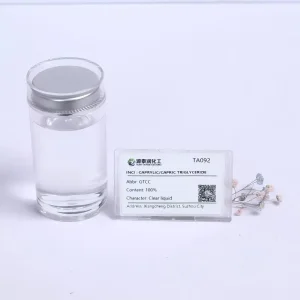
True viscosity engineering also relies heavily on the lipid phase. Natural-derived esters, such as Caprylic/Capric Triglyceride (CAS 65381-09-1) and highly refined emollients like Butylene Glycol Dicaprylate/Dicaprate (BGCC, CAS 211107-84-5), do not just moisturize the stratum corneum; they modulate the packing density of the oil droplets, contributing directly to the body, firmness, and spreadability index of the final cosmetic formulation.
We are a leading supplier in the daily chemical raw materials industry, dedicated to delivering high-quality products and comprehensive one-stop services to support our customers in R&D, production, and supply chain optimization.
Our mission is to drive innovation and efficiency in the global daily chemical industry by providing cutting-edge solutions tailored to our clients' needs. Through strict compliance with international manufacturing guidelines and advanced R&D investments, we ensure that our global partners receive materials that meet the highest standards of safety, purity, and eco-friendliness.
From amino-acid surfactants to cosmetic preservatives, we supply a complete chemical portfolio to optimize production cycles and minimize supply chain risks.
Offering customized OEM/ODM services, helping cosmetics chemists achieve targeted viscosity profiles, texture requirements, and stability standards.
Utilizing structured logistics networks to deliver high-quality raw materials exactly when required, minimizing warehousing overheads for our clients.
Engineered chemical structures for household care, clinical skincare, and industrial performance.
Application: Personal Care & Clean Beauty Cream Formulations.
System Blueprint: Leverages Sodium Cocoyl Glutamate and Sodium Lauroyl Sarcosinate for ultra-mild, dermatologically-safe cleansing. Retains natural barrier lipids while delivering a rich, easily rinsed micro-foam.
Application: Sustainable Household & Commercial Care.
System Blueprint: Employs Sodium Laureth Sulfate (SLES) and Sodium Alpha-Olefin Sulfonate (AOS) coupled with CMEA thickeners to ensure dynamic viscosity, high soil suspension, and rapid biodegradation profiles.
Application: Fabric Conditioning & Industrial Textile Treatment.
System Blueprint: Utilizes cationic Ester Quaternary Ammonium Salts (CAS 91995-81-2) to establish stable lamellar dispersions that coat fibers evenly, yielding anti-static benefits and superior softness.
Application: Premium Body Care & Professional Salons.
System Blueprint: Combines Cocamidopropyl Betaine (CAB-35) with nonionic APG1214 (Lauryl Glucoside) and Xanthan Gum to yield a non-drying, high-viscosity body wash compatible with sensitive skin.
Application: Heavy Machinery Maintenance & Automotive Cleaning.
System Blueprint: Formulated with Linear Alkylbenzene Sulfonate (LAS) combined with Glycol Distearate (EGDS) solvents and alkaline lipases to break down complex hydrocarbons rapidly and efficiently.
The convergence of green chemistry, bio-fermentation, and cold-process manufacturing.
As the personal care industry moves towards carbon-neutral operations, the development of thickeners is undergoing a major evolution. The technological roadmap focuses on three main fronts:
1. Cold-Process Emulsification: Conventional creams require heating both the water and oil phases to 75–80°C, consuming significant energy. Next-generation thickening emulsifiers (such as modified glutamates and polymer complexes) allow stable emulsification at room temperature, reducing energy footprints by up to 60%.
2. Bio-Fermented Rheology Modifiers: Microbial fermentation is producing novel biopolymers with unique flow behaviors. These polymers show exceptional stability in the presence of high salt levels and complex active ingredients, outperforming traditional cellulose ethers and synthetic carbomers.
3. Advanced Preservative Compatibility: Thickeners are being developed to work harmoniously with mild, green preservative systems (such as 1,2-Hexanediol and organic acids). This prevents the viscosity loss that can occur when adding multi-functional formulation ingredients.
Expert technical answers addressing formulation challenges, material compatibility, and chemical specifications.
Sodium Stearoyl Glutamate is an amino acid-based anionic emulsifier. When dispersed in water and neutral-to-weakly-alkaline environments, it forms structured lamellar gel networks in the continuous phase. These networks trap oil droplets and immobilize free water molecules, significantly boosting the viscosity and mechanical stability of the emulsion, while leaving a soft, non-greasy feel on the skin.
Cocamide DEA is associated with the risk of generating nitrosamines, which are restricted under global cosmetic regulations (including EU Annex III). Cocamide MIPA (CAS 68333-82-4) provides an amine-free, highly biodegradable alternative. It offers superior thickening, foam building, and viscosity stabilization in surfactant systems without safety concerns.
BGCC (CAS 211107-84-5) is a high-purity, low-polarity emollient ester. It acts as an excellent solvent for active cosmetic ingredients and UV filters. In emulsion systems, it delivers a very light, dry-cushion skin feel, reducing the heavy greasiness associated with high-viscosity vegetable oils while maintaining excellent emulsion stability.
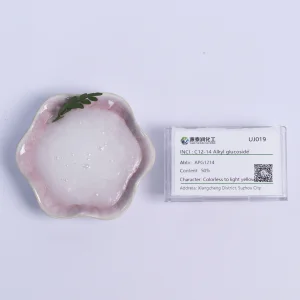
Lauryl Glucoside (CAS 110615-47-9) is a nonionic surfactant with a long alkyl chain (C12-C14). In creams and lotions, it acts as a co-emulsifier that participates in forming the interfacial film. Because of its structural packing, it helps build liquid crystalline structures that increase the system’s viscosity and long-term shelf-life.
PEG-150M (CAS 130249-48-8) is a synthetic ethoxylated polymer. While highly effective as a rheology modifier and water-based thickener in daily care products, it generally does not meet standard organic certification criteria (such as COSMOS or ECOCERT) due to the ethoxylation process. For certified organic formulations, we recommend switching to natural gelling agents like Xanthan Gum, sclerotium gum, or amino acid gellants.
Amino acid surfactants, such as Disodium Cocoyl Glutamate and Sodium Lauroyl Glutamate, function best within a pH range of 5.5 to 7.0. Within this window, they balance mildness, foaming performance, and viscosity development. If the pH drops below 5.0, these surfactants may convert to their insoluble acid forms, which can lead to formulation separation or precipitate formation.
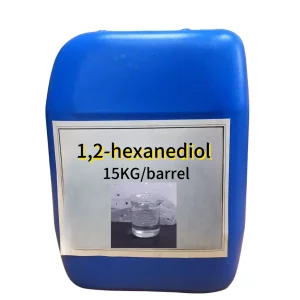
1,2-Hexanediol is a multi-functional glycol that acts as both a humectant and a preservative booster. Because of its amphiphilic structure, it can partition into the oil-water interface, slightly reducing interfacial tension. Formulators should monitor its inclusion, as it can sometimes lower the viscosity of polymeric thickeners, requiring minor adjustments to the co-thickening agents.
We implement a strict quality management system that monitors raw materials from source to final delivery. Every batch of thickeners undergoes rigorous analytical testing, including gas chromatography, HPLC, Brookfield viscosity measurement, and color value assessments, ensuring reliable performance in our clients' manufacturing lines.
Discover our comprehensive range of raw materials for professional personal care, home care, and industrial chemical applications.