Explore our industrial raw chemical inventory for high-performance home care, fabric conditioning, and personal care solutions.
A technical guide for home care formulators, procurement managers, and contract manufacturers.
Cationic surfactants represent a class of amphiphilic compounds where the hydrophilic polar headgroup carries a net positive charge in aqueous solution. Unlike anionic surfactants (such as SLES, SLS, or LAS) which are typically used for high-foaming dirt emulsification, cationic surfactants interact selectively with negatively charged surfaces. This distinct capability makes them indispensable in household care, specifically for fabric softening, static control, surface disinfection, and anti-deposition coatings.
The primary chemical structure consists of one or more long-chain alkyl hydrophobic groups connected to a positively charged nitrogen atom (quaternary ammonium compounds or QACs). Commonly sourced chemical derivatives include Cetrimonium Chloride (1631), Behentrimonium Chloride, and biodegradable esterquats. Their mechanism of action relies on electrostatic attraction; once dissolved in washing liquors, the positively charged head binds to the negatively charged fibers of fabrics (which possess an inherent negative charge from cellulose or synthetic polymer processing). The hydrophobic tails align outward, creating a microscopic, lubricating monolayer that reduces friction, leaving fabrics feeling soft and reducing static accumulation.
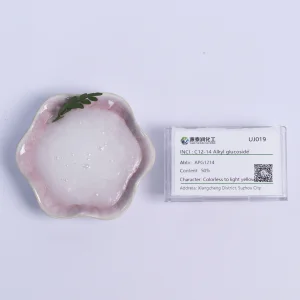
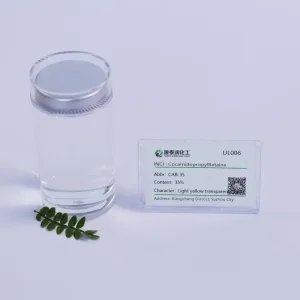
Beyond softening properties, quaternary ammonium cationic surfactants are highly potent biocidal agents. Compounds like Benzalkonium Chloride (ADBAC) and Didecyl Dimethyl Ammonium Chloride (DDAC) degrade bacterial cell membranes by destabilizing the lipid bilayer, causing cell lysis and inactivation of viral envelopes. This property makes them vital components in household surface sanitizers, disinfectants, and sanitizing laundry detergents. To maintain high cleaning power while integrating biocidal efficacy, formulators utilize non-ionic surfactants (such as Lauryl Glucoside APG1214) or amphoteric surfactants (such as Cocamidopropyl Betaine CAB-35) to bridge compatibility gaps, avoiding the precipitation that occurs when anionics and cationics are blended directly.
How Chinese factories leverage complete supply chains and advanced raw materials to power the global market.
China is a hub for upstream chemical feedstocks, including fatty alcohols, fatty amines, and ethylene oxide. Direct pipeline and regional access to raw materials allow Chinese surfactant factories to minimize logistics overheads, stabilize supply pricing, and offer competitive global market rates.
Modern Chinese manufacturing sites operate under strict environmental and quality regulations, utilizing automated, DCS-controlled reactor systems. This level of automation guarantees batch-to-batch consistency, low residual free amine levels, and strict control over by-products like 1,4-dioxane.
Chinese factories are highly responsive to customer specifications, with capabilities ranging from customizing active matter concentrations (e.g., preparing high-active 95%+ powders to reduce global shipping costs) to formulating tailormade blends that combine cationic, non-ionic, and amphoteric surfactants.
Optimized formulas and surfactant selections for target product categories.
Primary Agent: Cetrimonium Chloride or Esterquat salts.
Function: Imparts high fiber softness, eliminates static electricity on natural and synthetic textiles, and shortens drying times. Helps preserve the integrity of synthetic microfibers over multiple washes.
Primary Agent: Quaternary Ammonium Chlorides paired with nonionics like APG1214.
Function: Acts as a disinfectant cleaner that dissolves oils and removes microorganisms from floors, kitchen counters, and high-touch areas, leaving a protective, residue-free protective coating.
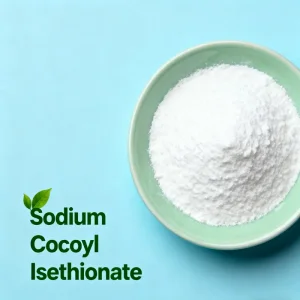
Primary Agent: Concentrated solid surfactants (e.g., SCI 85% Powder, Sodium Taurine Cocoyl Methyltaurate).
Function: Enables water-free formulations by packing high-active cleansing agents into PVOH film pods. Solubilizes rapidly in cold water while maintaining stability at low water ratios.
A breakdown of surfactant performance across different household and commercial applications.
| Application Solution | Surfactants Employed | Key Performance Parameter | Key Advantages |
|---|---|---|---|
| Eco-Friendly Laundry Liquid | Sodium Laureth Sulfate (SLES) + Alkyl Polyglycosides (APG1214) | Rapid wetting & soil suspension | Biodegradable, low dermal irritation, performs well in hard water. |
| Mild Amino Acid Cleanser | Sodium Cocoyl Glutamate + Sodium Lauroyl Sarcosinate | Dense micro-foam generation | Gentle on skin, leaves no tight feel, suitable for sensitive or baby skin. |
| Anti-Static Fabric Softener | Cetrimonium Chloride (1631) + Thickener (CMEA) | Electrostatic potential reduction | Protects clothing fibers, soft texture, improves perfume retention. |
| Industrial Heavy Degreaser | Linear Alkylbenzene Sulfonate (LAS) + APG0810 + Chelant | Lipophilic contact angle reduction | Rapidly emulsifies mineral oils and greases on heavy machinery. |
Navigating technical compliance, customs clearance, and global chemical transport.
Sourcing chemical agents internationally requires strict adherence to local chemicals registers. Experienced Chinese suppliers verify regulatory compliance by supplying comprehensive SDS (Safety Data Sheets) with updated GHS classification, REACH pre-registrations for Europe, and EPA inventory compliance for US markets.
Whether your operations call for IBC Totes, 200L HDPE Drums, or ISO tanks for high-volume liquids, bulk manufacturers design specialized packaging to prevent raw material degradation during transport. This includes heating coil systems for materials that solidfy at lower temperatures.
High-precision analytical labs utilize High-Performance Liquid Chromatography (HPLC) and Gas Chromatography (GC) to verify raw material composition, check alkyl chain distributions, and monitor trace contaminants, ensuring consistent quality for every shipment.
The industry's transition towards bio-sourced raw materials, reduced carbon footprints, and circular supply chains.
The global household cleaning sector is shifting away from petroleum-based raw materials. The production of cationic surfactants is increasingly utilizing plant-derived sources, such as coconut oil, palm kernel oil, and rapeseed-derived fatty acids. These bio-based alternatives deliver comparable performance while lowering overall carbon footprints, supporting corporate ESG targets and meeting consumer preferences for natural formulations.
Traditional quaternary ammonium surfactants (like DHTDMAC) are being replaced by Esterquats due to their lower environmental persistence. Incorporating weak ester linkages between the long hydrocarbon chains and the polar head group allows these molecules to degrade quickly and safely in wastewater treatment plants, reducing aquatic toxicity without compromising softening performance.
To reduce energy consumption during washing cycles, modern detergents and softeners are formulated to dissolve and perform efficiently in cold water (15°C–20°C). Cationic agents are being engineered with modified hydrophobic chain structures (e.g., introducing branch points or unsaturated bonds) to lower Krafft points, ensuring rapid dispersion and clean rinsing at low temperatures.
Technical answers to common formulation, sourcing, and application inquiries.
Enhance the stability, viscosity, and foaming properties of your products with our specialty formulation additives.