Explore our premium grade chemical stabilizers and surfactant thickeners meticulously optimized for stability, foam generation, and rheology control.


We assure you that our products originate from well-managed and sustainable resources, backed by advanced scientific research.
Providing a highly diversified, comprehensive catalog of personal care raw materials, functional additives, and surfactant bases to streamline procurement.
Equipped with state-of-the-art analytical equipment to support high-level OEM/ODM customization, micro-structural testing, and formula optimization.
Leveraging scale efficiencies and highly optimized chemical supply chain networks to provide market-leading cost performance without compromising purity.
Our raw materials and finished formulations are dispatched precisely in alignment with your production cycles, minimizing warehousing and holding costs.
Understanding interfacial chemistry, regulatory shifts, and sustainable production paradigms in modern surfactant manufacturing.
In modern chemical formulation, the role of stabilizers and emulsifiers has shifted from simple mechanical dispersing agents to complex, multi-functional rheology modifiers and interfacial control systems. An emulsion, by nature, is thermodynamically unstable. The free energy of the interface between immiscible oil and water phases is positive, leading to natural coalescence, flocculation, creaming, and sedimentation. The application of sophisticated agents such as PEG-120 Methyl Glucose Dioleate and Cetyl Stearyl Alcohol Ceteareth-20 serves to lower this interfacial tension while establishing strong steric and electrostatic barriers.
By tailoring the Hydrophilic-Lipophilic Balance (HLB) values and creating crystalline gel networks in the continuous phase, modern chemical engineers can secure long-term kinetic stability. Emulsifiers dictate droplet size distribution (often aiming for sub-micron ranges in advanced cosmetic emulsions), which directly influences sensory attributes, active delivery, and thermal resistance. As daily chemical requirements become more stringent, understanding the synergy between nonionic, anionic, and amphoteric structures is vital to creating shelf-stable products across extreme temperature variations.
Chemical buyers today face highly volatile market dynamics and tight regulatory frameworks. Large-scale procurement demands more than competitive pricing; it requires certified purity, low volatile organic compound (VOC) levels, and complete compliance with European REACH, US FDA, and ECOCERT standards. Global manufacturers demand raw materials with consistent chemical properties—specifically batch-to-batch predictability in viscosity, color, and pH.
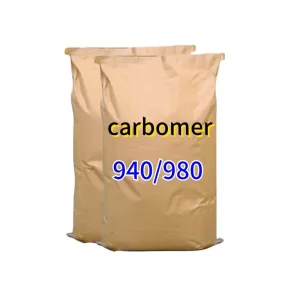
Furthermore, structural shifts in shipping and international commerce mean that security of supply is paramount. A single delayed shipment of an essential stabilizer like Carbopol 940 can stall high-capacity bottling lines for major consumer brands. Global buyers look for factories capable of providing structured documentation, including Certificates of Analysis (COA), safety data sheets (SDS) conforming to GHS, and technical data sheets (TDS) detailing exact application limits and hazard classifications.
Located in the heart of China’s advanced chemical industrial cluster, Suzhou Yuantairun Chemical Co., Ltd. (YuantaiRun) has integrated Industry 4.0 technologies to address modern manufacturing complexities. By deploying computerized Distributed Control Systems (DCS) and Manufacturing Execution Systems (MES), we monitor reaction metrics in real-time, ensuring optimal ethoxylation, sulfonation, and esterification cycles.
This automated accuracy allows us to control the degree of polymerization and minimize raw material impurities (such as free ethylene oxide or 1,4-dioxane limits in ethoxylated products). This integration enables production flexibility: we can easily pivot between small-batch custom formulations and high-volume raw material manufacturing. Supported by automated packaging lines and real-time inventory tracking, YuantaiRun guarantees supply chain resilience, allowing overseas buyers to plan their production lines with confidence.
Discover how our chemical products are integrated into global retail, institutional, and industrial chemical formulations.
Utilizes SLES (Sodium Laureth Sulfate) and AOS (Sodium Alpha-Olefin Sulfonate) as core surfactants for deep soil removal. Combined with stabilizer CMEA (Cocamide MEA) to build stable viscosities and rich foam profiles in cold-water washes.
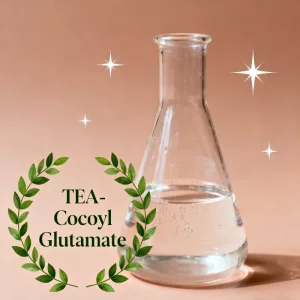
Formulated with Sodium Cocoyl Glutamate and Sodium Lauroyl Sarcosinate for ultra-mild cleansing. Certified by ECOCERT, this green profile maintains skin barrier integrity while producing fine, dense, and luxurious foam.
Incorporates cationic surfactants like Cetrimonium Chloride (1631) to achieve soft feel and reduce static charge. The formulation relies on balanced emulsification networks to prevent product separation during long-term storage.
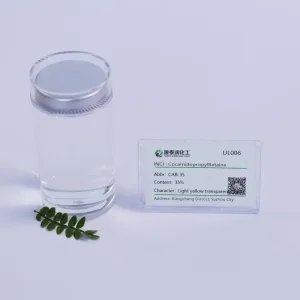
Blends amphoteric CAB-35 (Cocamidopropyl Betaine) and nonionic Lauryl Glucoside. The addition of Xanthan Gum and synthetic polymer stabilizers guarantees clear formulations and high physical suspension properties.
Designed with LAS (Linear Alkylbenzene Sulfonate) and emulsifiers like EGDS (Glycol Distearate) for rapid grease breakdown. High thermal and chemical stability makes them suitable for machinery and vehicle cleaning.
Tailored packaging, performance specs, and sensory targets designed for global brands.
Custom-formulated shampoos, hand washes, and body washes. Tailored performance parameters like viscosity, foaming speed, and conditioning properties for retail or institutional supply.
Optimized laundry liquid bases, multi-surface sprays, and dishwashing formulations with customizable fragrances, eco-friendly certifications, and target active concentrations.
Highly concentrated surfactant blends and raw emulsifiers packaged in drums, IBCs, or flexitanks, designed for dilute-to-use manufacturing networks globally.
One of the most notable disruptions in the chemical industry is the rapid shift away from petrochemical-derived alkylphenol ethoxylates (APEOs) toward biodegradable, plant-derived alternatives. Consumers and regulatory bodies are putting pressure on formulators to source natural materials like alkyl polyglucosides (APGs) and amino acid-based surfactants. These ingredients offer excellent dermatological tolerance, making them highly desirable for baby care and sensitive skin products.
Furthermore, cold-process emulsification is gaining momentum as manufacturers seek to lower carbon footprints and optimize energy consumption. Traditional emulsification requires heating oil and water phases to 75-80°C. By using advanced polymeric stabilizers and cold-processable liquid emulsifying systems, formulators can create stable emulsions at room temperature, dramatically reducing cycle times and heating costs.
Achieving stable rheology in complex surfactant blends requires deep understanding of micellar transitions. When combining anionic surfactants like Sodium Lauroyl Sarcosinate with amphoteric agents like Cocamidopropyl Betaine, the packing parameter of the mixed micelles changes. This structural shift can lead to the formation of elongated, worm-like micelles, which naturally build viscosity without requiring excessive salt or heavy synthetic thickeners.
In formulations where clarity is essential, the addition of nonionic thickeners, such as PEG-120 Methyl Glucose Dioleate, works by associating with these micelles to build a three-dimensional network. This network prevents phase separation and allows for the uniform suspension of insoluble particles, like silicones, natural oils, or pearlizing agents, ensuring long-term aesthetic appeal.
Get answers to common chemical application, manufacturing, and sourcing questions.
Keep up with our latest research, new ingredient releases, and formulation technologies.
March 6, 2026
Discover how Runtec® SCI85, a mild anionic surfactant with high active content, enhances formulations with a gentle, refreshing wash feeling and excellent compatibility.
February 2, 2026
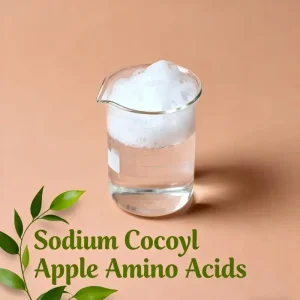
An oil-resistant amino acid surfactant with excellent foaming properties, specifically designed for mild shampoos and facial washes requiring rich lather.
January 31, 2026
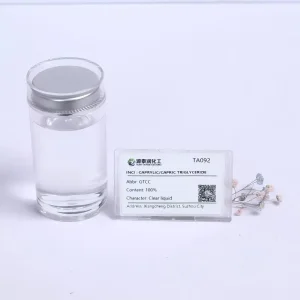
This high-purity skin moisturizer is compatible with various cosmetic oils, featuring strong dispersing power and a non-greasy skin feel.
Select from our widely exported industrial-grade surface-active thickeners and conditioning bases.