Engineered for high performance, thermal stability, and ecological compatibility in industrial and consumer formulation systems.
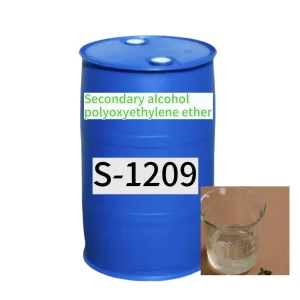
Turkey stands as one of the most dynamic industrial hubs bridging Europe, Asia, and the Middle East. With its expansive manufacturing sectors, the demand for high-grade chemical intermediate materials—specifically surface-active agents (surfactants)—has witnessed exponential growth over the past decade. The Marmara and Aegean regions (specifically provinces like Kocaeli, Istanbul, Izmir, and Bursa) house extensive industrial corridors dedicated to textile processing, home care product manufacturing, and chemical synthesis.
Nonionic surfactants represent the backbone of modern formulations due to their unique properties: they carry no electrical charge in aqueous solutions, rendering them highly compatible with other surfactant classes (anionic, cationic, and amphoteric) and exceptionally stable in hard water conditions. For Turkish manufacturers exporting finished products to the European Union, meeting strict environmental and chemical regulations is paramount.
Consequently, the transition from conventional petrochemical-based surfactants to bio-based, biodegradable nonionic options like Alkyl Polyglycosides (APG) and low-toxicity Fatty Alcohol Ethoxylates (AEO) has accelerated. Our production facilities and export operations are structured specifically to support Turkish formulators in achieving compliance with local KKDIK regulations (Turkey-REACH) and global ecological labels, ensuring seamless trade flows and superior final product performance.
The industrial landscape in Turkey dictates specific criteria for raw material selection:
Understanding the fundamental chemistry of nonionic surfactants is crucial for optimizing formulations. Unlike anionic surfactants, which rely on electrostatic repulsion, nonionic surfactants stabilize emulsion and dispersion systems through steric hindrance and hydrogen bonding with water molecules. The hydrophilic moiety typically consists of polyoxyethylene chains (as in AEOs) or carbohydrate rings (as in APGs).
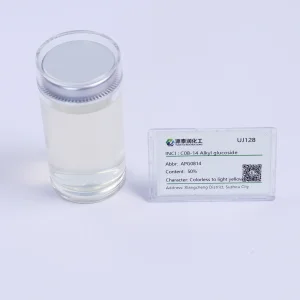
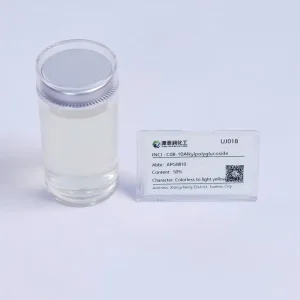
Alkyl Polyglycosides are synthesized via the direct condensation of starch-derived glucose with fatty alcohols. The resulting hemiacetal structure provides exceptional environmental compatibility. Fatty Alcohol Ethoxylates are produced through the base-catalyzed addition of ethylene oxide to primary fatty alcohols, yielding a distribution of oligomers characterized by their average moles of ethylene oxide (EO).
| Surfactant Group | Chemical Structure (Hydrophile/Lipophile) | HLB Value Range | Critical Micelle Conc. (CMC) | Primary Performance Attributes |
|---|---|---|---|---|
| APG 0810 | C8-C10 Oligoglucoside | 13.0 - 14.0 | ~ 1.5 - 2.5 g/L | High alkali tolerance, superb wetting, rich flash foam, excellent hydrotrope properties. |
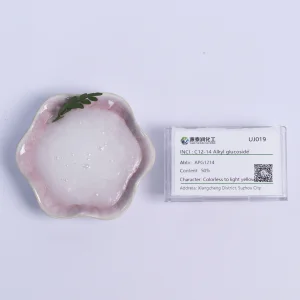
| APG 1214 | C12-C14 Oligoglucoside | 11.5 - 12.5 | ~ 0.05 - 0.1 g/L | Superior mildness, high viscosity-building synergy with anionics, excellent detergency. |
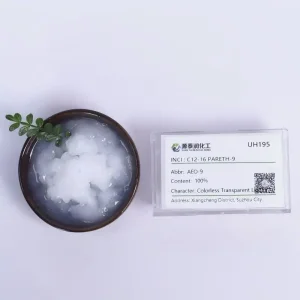
| AEO-9 | C12-C15 Primary Alcohol + 9 EO | 13.0 - 13.5 | ~ 0.01 - 0.05 g/L | Exceptional grease emulsification, rapid wetting, high soil dispersion in laundry formulations. |
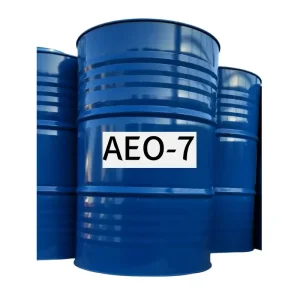
| AEO-7 | C12-C14 Primary Alcohol + 7 EO | 12.0 - 12.5 | ~ 0.008 - 0.03 g/L | Optimal wetting agent, intermediate emulsifier, highly soluble in warm water systems. |
Nonionic surfactants exhibit much lower CMC values compared to their anionic counterparts, meaning they form micelles and begin cleaning at significantly lower concentration thresholds, optimizing material costs.
By blending high HLB surfactants (e.g., APG0810) with lower HLB emulsifiers, formulators can precisely tailor the emulsion stability of essential oils, silicones, and paraffin waxes in water.
For ethoxylated surfactants (AEO series), solubility decreases as temperature rises. The cloud point is the temperature at which the surfactant phase-separates. We customize EO chain lengths to match the processing temperature of Turkish textile dyeing operations.
The global surfactant industry is undergoing a structural transition driven by decarbonization, raw material volatility, and shifting consumer preferences. Petrochemical feedstocks (ethylene, benzene) face regulatory pressures, causing a pivot toward oleochemical feedstocks (palm kernel oil, coconut oil, corn starch). As a leading exporter, our factory utilizes vertically integrated sourcing to buffer raw material cost spikes, ensuring price stability for our Turkish partners.
Turkish manufacturers exporting to the EU must comply with REACH, while domestic sales must meet local KKDIK regulations managed by the Ministry of Environment, Urbanization and Climate Change. This dual regulatory requirement demands strict traceability of chemical impurities, 1,4-dioxane limits, and free ethylene oxide residues. Our nonionic surfactants are processed using vacuum-stripping technologies to guarantee ultra-low 1,4-dioxane levels (<10 ppm, down to <1 ppm upon request), enabling Turkish cosmetics and detergent exporters to confidently enter high-end European markets.
The next generation of surface-active agents will move away from synthetic head groups entirely. Our R&D division is focused on developing functionalized alkyl polyglycosides and amino acid-based anionic-nonionic hybrids that offer superior performance in hard water without the need for EDTA or phosphate builders. By cooperating with our engineering lab, Turkish formulators can access pilot-scale testing data for green laundry sheets, solid shampoo bars, and concentrated agricultural adjuvants.
How we support Turkish chemical manufacturers and formulators from laboratory synthesis to bulk port delivery.


Suzhou Yuantairun Chemical Co., Ltd. is dedicated to delivering high-quality products and comprehensive one-stop services to support our global partners in R&D, production, and supply chain optimization. Our mission is to drive innovation and efficiency in the global daily chemical industry by providing cutting-edge solutions tailored to our clients' specific industrial environments.
We work closely with Turkish manufacturers in Kocaeli, Izmir, and Bursa, supplying raw materials that comply with the highest standards of safety, quality, and environmental sustainability. By integrating advanced production lines with strict analytical testing protocols (including HPLC, GC, and NMR analysis), we guarantee batch-to-batch consistency and complete product transparency.

Demonstrated chemical configurations utilizing our premium surfactant range to achieve targeted commercial objectives.
Configuration: Utilizes SLES (Sodium Laureth Sulfate) and AOS (Sodium Alpha-Olefin Sulfonate) as core anionic cleaning elements. These are coupled with our nonionic APG1214 and AEO-9 to optimize soil roll-up and grease dispersion. CMEA and CAPB are integrated to adjust rheology and stabilize foam structure, resulting in a gentle, highly biodegradable product suited for European export.
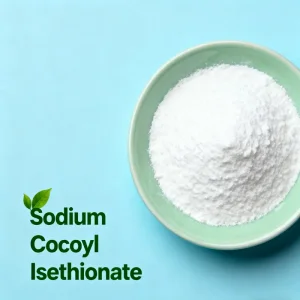
Configuration: Utilizes mild amino acid surfactants (Sodium Cocoyl Glutamate and Sodium Lauroyl Sarcosinate) as primary foaming agents. To build viscosity and enhance lather density without adding sulfates, APG0810 or Cocoyl Glucoside is introduced. This combination respects the skin barrier, reduces irritation, and satisfies clean beauty criteria.
Configuration: Formulated using quaternary esterquats or cationic surfactants (Cetrimonium Chloride 1631) to deposit protective charges onto cotton and synthetic fibers. A small amount of AEO-7 or AEO-9 is introduced as a co-emulsifier to stabilize the oil-in-water dispersion, ensuring consistent fragrance deposition and minimizing viscosity drift during storage.
Customizing chemical properties, packaging, and concentrations to align with specific target market positioning.
Tailored surfactant concentrates designed for retail, hotel amenities, and professional salons. Available in varying concentrations, packaging types, and viscosities.
High-efficiency liquid concentrates utilizing nonionic surfactants for low-temperature washing. Custom fragrances, colorants, and enzyme stabilization systems available.
Cost-effective surfactant blends optimized for public facilities, shopping malls, and restaurant hygiene stations, balancing skin feel with rapid foaming.
Explore our complete raw material portfolio supporting Turkey's personal care, household care, and industrial processing sectors.
Addressing common queries from formulation chemists, purchasing agents, and regulatory compliance departments in Turkey.
We work with a local Only Representative (OR) based in Istanbul to manage the registration, evaluation, and documentation of all our exported nonionic surfactants. We supply comprehensive safety data sheets (SDS) in Turkish and cooperate with local regulatory bodies to ensure smooth customs clearance.
We recommend our Alkyl Polyglycoside series, specifically APG0810 (Caprylyl/Capryl Glucoside) and APG1214 (Lauryl Glucoside). These surfactants are biodegradable, mild on the skin, and derived from renewable corn starch and fatty alcohols, making them ideal replacements for traditional sulfates.
For standard FCL (Full Container Load) shipments from our factory, shipping times range between 18 to 25 days depending on the shipping line. We arrange comprehensive logistics, packaging in ISO-tanks, IBC drums, or standard 200kg drums, and provide tracking updates throughout transit.
Yes. Our polymerization reactors allow us to adjust the average degree of ethoxylation (EO moles) to meet specific cloud point and hydrophilic-lipophilic balance (HLB) requirements. This ensures optimal stability in high-temperature textile scouring baths or concentrated agricultural emulsions.
Under recommended storage conditions (between 15°C and 40°C in original sealed containers), our APG range exhibits a shelf life of at least 24 months. Because they are highly alkaline (pH 11.5–12.5) in concentrated form, they are naturally self-preserving and resistant to microbial growth.
Our production facilities utilize modern catalyst systems and post-reaction stripping technologies. We monitor all batches using gas chromatography (GC-MS) to ensure 1,4-dioxane levels remain well below standard international cosmetic limits, typically under 10 ppm.