
Engineered to perform in highly demanding chemical systems. Direct import paths to Almaty, Atyrau, and Karaganda.
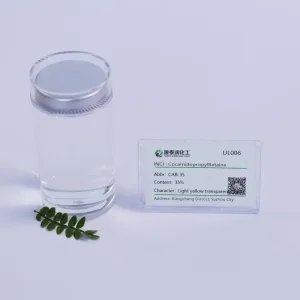
Kazakhstan sits at the heart of Central Asian heavy industry, presenting highly specialized chemical requirements. With major oilfields located in the Caspian basin, such as Tengiz, Kashagan, and Karachaganak, the regional demand for surfactant-based solutions is growing rapidly. Advanced oil recovery operations in these zones encounter severe environmental conditions—primarily extreme geological salinity, high temperatures, and the presence of complex divalent cations like calcium and magnesium.
Conventional anionic surfactants regularly face precipitation and loss of surface-active properties in these reservoirs. Zwitterionic surfactants (particularly sulfobetaines and hydroxysultaines) act as critical stabilizers. By maintaining dual ionic charges within their hydrophilic headgroups, they exhibit extreme tolerance to high-electrolyte environments. This keeps oil-water interfacial tension (IFT) exceptionally low, enabling effective Enhanced Oil Recovery (EOR).
Simultaneously, major urban centers like Almaty, Astana, and Shymkent are experiencing a manufacturing shift. Local production of consumer goods, home cleaners, and professional hygiene products is expanding. Manufacturers are moving away from harsh raw chemicals in favor of skin-friendly, biodegradable alternatives, driving demand for high-purity amphoteric surfactants.

Our focus on molecular precision drives performance under harsh chemical and physical conditions.
Zwitterionic molecules carry both positive (quaternary ammonium) and negative (carboxylate or sulfonate) groups on a single chain. Depending on the medium's pH, they shift from cationic to anionic characteristics, reaching an isoelectric point where they behave as neutral structures. This enables excellent compatibility with all other surfactant types while reducing skin irritation profile in consumer products.
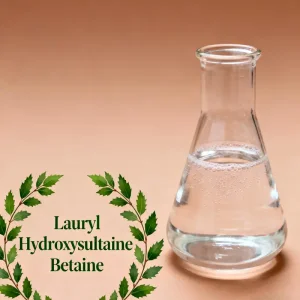
While standard Cocamidopropyl Betaine (CAB) delivers excellent foam stability, Lauryl Hydroxysultaine (LHS) replaces the carboxylate group with a sulfonate link. This molecular adjustment prevents precipitation in hard water, allowing LHS to remain fully soluble and active even in saturated brine solutions common in Kazakh oilfields.
When combined with trace inorganic salts or primary anionic systems (like SLES or Alpha-Olefin Sulfonates), our zwitterionics form elongated rod-like micelles. These structures naturally build formula viscosity, reducing the need for synthetic polymer thickeners in shampoos and industrial degreasers alike.
Year of Establishment
Global Industrial Partners
Batch-to-Batch Consistency
Average Direct Rail Transit to KZ
Tailored surfactant solutions designed to address demanding field conditions and industrial processes.
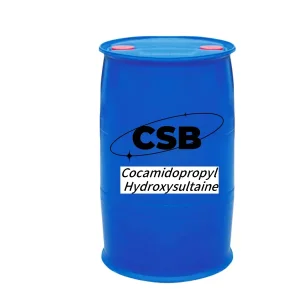
Formulated with Lauryl Hydroxysultaine and Cocoamidopropyl Sulfonate Betaine (CSB) to withstand high calcium concentrations. Lowers interfacial tension at the oil-rock boundary and improves mineral separation during sulfide ore flotation processes in central Kazakhstan.
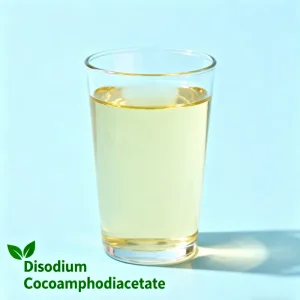
Combines Disodium Cocoamphodiacetate and Sodium Lauroamphoacetate to create mild baby washes and facial cleansers. These ingredients mitigate the harshness of traditional primary surfactants without compromising lather quality.
Utilizes amine oxides like Lauryl Dimethylamine Oxide (OB-2) to stabilize chlorine bleach and acidic formulations. Provides vertical surface adhesion and rapid grease penetration for industrial and automotive cleaning applications.

Exporting raw chemical materials into Kazakhstan requires strict adherence to the regulatory framework of the Eurasian Economic Union (EAEU). Our products are fully documented with corresponding Technical Data Sheets (TDS), Safety Data Sheets (SDS) matching GHS standards, and declarations of conformity. We ensure compliance with the EAEU Technical Regulation on Safety of Chemical Products (TR EAEU 041/2017).
Logistically, our location in China allows us to leverage direct overland rail routes. Shipping from our facilities via the Altynkol–Khorgos or Dostyk–Alashankou entry points avoids the delays and high costs of sea transit. This overland corridor provides reliable, year-round delivery directly to major industrial hubs like Karaganda, Pavlodar, and Atyrau within 7 to 14 days.
High-capacity, automated chemical synthesis designed to support stable global supply chains.
Continuous closed-loop reactor systems stabilize critical parameters like pH, free amine residues, and active matter concentration across production batches.
Every shipment is backed by batch-specific gas chromatography and HPLC profiles, ensuring strict compliance with cosmetic and industrial grade specifications.
Strategic vertical integration with domestic petrochemical and oleochemical feedstocks helps mitigate market price volatility and ensures steady supply.
Located near major transport corridors to coordinate shipping schedules directly with rail transport operators, minimizing warehouse storage times.
Explore our broader chemical portfolio for personal care, household detergents, and industrial applications.

Expert answers addressing the practical applications of zwitterionic surfactants in high-salinity and cold-weather conditions.
Zwitterionic surfactants carry coexisting positive and negative charges on a single molecule. This molecular structure reduces electrostatic repulsion between headgroups in electrolyte-rich environments. The presence of these dual charges maintains a stable hydration layer even in highly saline water containing calcium and magnesium ions, preventing the precipitation and phase separation common in simple anionic systems.
High-concentration liquid surfactants like Cocamidopropyl Betaine (35% active) should be stored in temperature-controlled warehouses to avoid exposure to freezing conditions. If the product undergoes phase separation or freezing during winter transit, it can be slowly warmed to 30-40°C and stirred gently to restore its uniform liquid state without affecting chemical performance.
We provide comprehensive safety documentation, including SDS sheets conforming to EAEU standards and GHS formats, detailed Certificates of Analysis (COA) for each batch, and customs clearance support via our established Belt-and-Road logistics channels. This documentation ensures compliance with local import regulations at the border.
Yes. Our automated manufacturing facility allows us to adjust active matter concentrations, salt levels, and pH profiles to match specific customer requirements. This is particularly helpful for industrial formulations like high-concentration cleaners and oilfield additives.