Surfactants form the cornerstone of the modern chemical formulation industries, playing critical roles in personal care, cosmetics, household detergency, and industrial cleaning. Among the diverse families of surface-active agents, zwitterionic surfactants (commonly referred to as amphoteric surfactants) have gained unparalleled prominence. Possessing both positive (cationic) and negative (anionic) charge centers within a single molecular structure, these compounds present highly versatile physicochemical profiles that adapt dynamically to environmental changes. As a leading zwitterionic surfactant supplier & exporter, Suzhou Yuantairun Chemical Co., Ltd. presents this whitepaper to dissect the technological innovations, market realities, and formulation strategies driving this industry forward.
1. The Chemistry & Structural Architecture of Amphoteric Systems
The unique performance of zwitterionic surfactants stems directly from their chemical architecture. At their isoelectric points, they exist as zwitterions (neutral dipolar ions). In acidic pH environments, they protonate to display cationic characteristics, whereas in alkaline media, they deprotonate to display anionic characteristics. This pH-responsive nature makes them highly compatible with all other classes of surfactants (anionic, cationic, and non-ionic).
Betaines & Sultaines
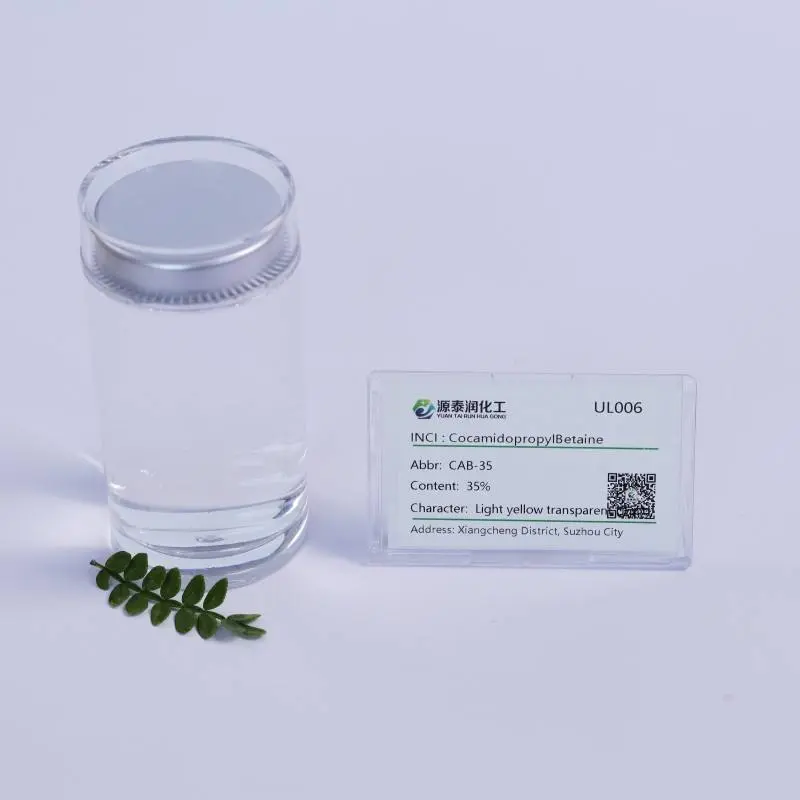
Represented prominently by Cocamidopropyl Betaine (CAB-35), these structures incorporate a quaternary ammonium cation and a carboxylate or sulfonate anion. They show exceptional foam stabilization and skin compatibility.
Amphoacetates
Synthesized from imidazoline intermediates, these compounds provide exceptionally low eye and skin irritation profiles, making them standard in baby shampoos and sensitive-skin cleansers.
Amine Oxides
While often classified separately, amine oxides exhibit strong zwitterionic traits under acidic conditions, contributing to grease emulsification and hypochlorite stability in household cleaning formulas.
A key property of zwitterionic surfactants is their ability to lower the Critical Micelle Concentration (CMC) when mixed with anionic surfactants like Sodium Laureth Sulfate (SLES) or Linear Alkylbenzene Sulfonate (LAS). This synergistic action enables formulators to achieve comparable cleaning and foaming performance at significantly lower overall surfactant active concentrations, minimizing raw material costs and skin irritation rates.
2. Global Commercial Status and Supply Chain Insights
The global market for zwitterionic surfactants is experiencing robust growth, driven by a structural shift in consumer demand toward "mildness," "sulfate-free," and "clean beauty." Historically dominated by Western chemical conglomerates, the manufacturing hub has rapidly transitioned to high-precision facilities in East Asia. As reliable suppliers, we have established highly responsive logistics pipelines that serve key manufacturing hubs across North America, Europe, and the Asia-Pacific region.
| Region | Primary Application Driver | Preferred Chemistries | Regulatory Landscape |
|---|---|---|---|
| North America | Premium personal care, sulfate-free shampoos, industrial cleaning | Betaines, Sultaines, Amino Acid derivatives | EPA TSCA, RSPO-certified palm derivatives |
| Europe | Clean beauty, highly biodegradable household detergents | Coco-glucosides, Alkyl Betaines, Amino Acid salts | Strict REACH registration, ECOCERT approval |
| Asia-Pacific | Rapidly expanding cosmetic market, heavy industrial degreasing | CAB-35, Lauryl Betaine, Sarcosinates | China IECIC list, local environmental audits |
| Latin America | Home care, cost-effective foaming liquids | Standard Cocamidopropyl Betaine, SLES blends | Growing demand for eco-friendly certifications |
A significant bottleneck in the global supply chain has historically been the volatility of natural feedstock pricing—specifically coconut oil and palm kernel oil. As a strategic partner, Suzhou Yuantairun Chemical Co., Ltd. mitigates these risks through direct integration with upstream growers and raw material refiners, assuring our clients consistent product quality and stable pricing structures regardless of market fluctuations.
3. Emerging Trends: The Rise of Bio-based & Circular Chemistry
The green chemistry revolution is reshaping the surfactant landscape. Modern consumers and regulatory bodies (such as the EU Commission under the Green Deal) demand ingredients with high biodegradability and low aquatic toxicity. Consequently, raw material suppliers are focusing on:
- Enzymatic Synthesis: Shifting away from energy-intensive thermal amidation processes toward low-temperature enzymatic catalysis, reducing carbon footprints during manufacturing.
- Upcycled Feedstocks: Utilizing agricultural by-products and circular carbon sources to synthesize the hydrophobic tail groups of surfactants.
- 1,4-Dioxane Free Formulations: Traditional ethoxylated surfactants often carry trace impurities of 1,4-dioxane. Zwitterionics and amino acid surfactants offer a clean alternative, free of carcinogenic by-products.
4. Technical Roadmap & Future Outlook
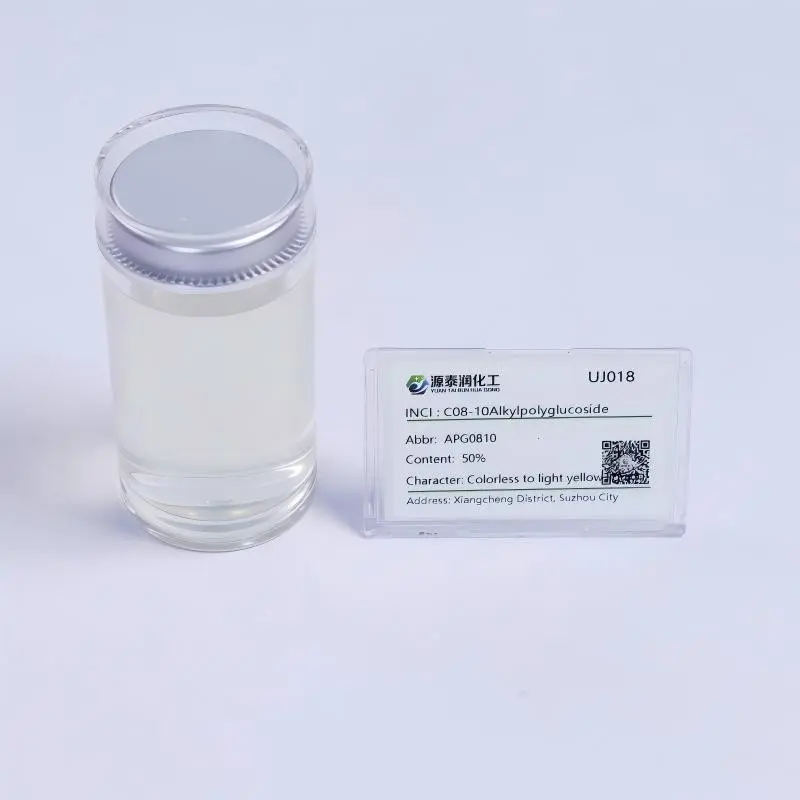
Our R&D roadmap centers on the optimization of multi-component surfactant concentrates. Rather than purchasing raw monomers, formulators are increasingly seeking pre-blended synergistic systems. By utilizing advanced molecular modeling, we design specialized blends that combine non-ionic APG derivatives, amphoteric betaines, and anionic amino acid salts. These customizable complexes display optimized rheological behavior, superior foam density, and immediate cold-water solubility.