Discover our industry-proven chemical surfactants, preservatives, and conditioners optimized for global formulation compliance.
Analyzing the chemical market dynamics, supply security, and sustainability protocols driving the transition to natural-source Sodium Lauryl Ether Sulfate.
Sodium Lauryl Ether Sulfate (SLES) remains the baseline anionic surfactant for high-foaming personal care and home care preparations. Within global trade, SLES 70% paste dominates the supply chain over the SLES 28% liquid variant. The primary driver is logistical optimization: by shipping a 70% active matter concentration, global buyers reduce freight costs by over 150% per metric ton of active ingredient. SLES 70% requires specialized dilution infrastructure upon arrival, which has led to concentrated industrial usage among large-scale FMCG producers, distributors, and bulk chemical reformulators.
Historically synthesized from ethylene oxide and petrochemical-derived fatty alcohols, today’s premium SLES 70% is sourced from natural, renewable oleochemical feedstocks—specifically palm kernel oil (PKO) or coconut oil. This shift satisfies consumer desires for plant-based ingredients and reduces the overall greenhouse gas footprint. Modern manufacturers balance the raw material fluctuations of palm oil indexes with strict chemical processing controls to maintain carbon-chain uniformity (typically C12-C14) for optimal foaming kinetics and thermal stability.
International chemical safety mandates continue to evolve. SLES 70% must conform to stringent thresholds of trace impurities. In the European Union and North America, regulatory scrutiny focuses on 1,4-dioxane—a cyclic ether byproduct generated during the ethoxylation phase. Ensuring a product is "REACH Certificated" means the complete chemical lifecycle is registered and documented, assuring supply safety. Brands targeting modern retailers seek SLES with 1,4-dioxane levels below 10 ppm, requiring advanced industrial stripping technologies during raw synthesis.
How Chinese advanced manufacturing infrastructures yield unrivaled scale, cost predictability, and consistent quality parameters.
Top-tier Chinese factories utilize state-of-the-art Italian Pressindustria or Swiss Buss loop reactor systems. These continuous-flow ethoxylation units operate with ultra-precise mass flow meters, ensuring the addition of exactly 2 or 3 moles of ethylene oxide (EO) per mole of fatty alcohol. This high precision limits the formation of free polyethylene glycols (PEG) and keeps the free fatty alcohol parameters exceptionally low, directly improving downstream formulation clarity and viscosity response.
Located in coastal chemical industrial parks (such as Jiangsu, Zhejiang, and Shandong hubs), China exporters benefit from direct pipelines connecting fatty alcohol imports to sulfation reactors. By skipping intermediate transport phases, factories reduce energy footprints and prevent ambient air contamination. Moreover, close proximity to deep-water ports like Shanghai and Ningbo allows for immediate ISO-container loading, reducing shipping lead times and preserving the chemical integrity of temperature-sensitive SLES 70% paste.
One of the primary differentiators of premium Chinese SLES 70% is its color profile. Utilizing continuous SO3 film sulfation reactors, the process maintains exact temperature controls, preventing the charring or yellowing of the paste. The resulting SLES 70% maintains a Klett color index under 10 (or Hazen color under 20 in 5% aqueous solution), allowing personal care formulators to create crystal-clear shampoos and shower gels without adding costly decolorizing agents.
Meeting modern ethical, environmental, and regional chemical registration criteria for international market access.
For European cosmetic and detergent manufacturers, REACH compliance is a strict legal requirement. Our SLES 70% possesses full REACH registration, verifying that all substance safety assessments have been conducted. This ensures the raw material has a clear toxicological profile, guaranteeing safety for end-consumers and enabling seamless entry into European ports without regulatory delays or legal liability risks.
Sustainable sourcing is essential to modern corporate ESG goals. SLES derived from palm kernel oil must be traceable. Our RSPO Mass Balance (MB) certified SLES 70% guarantees that the palm oil feedstocks used originate from sustainably managed forests that protect local biodiversity and respect indigenous land rights. This allows multinational brands to proudly display "Sustainable Palm Oil" sourcing icons on their final retail packaging.
Serving the Middle East, Southeast Asia, and global Muslim consumer populations requires verified Halal manufacturing environments. Our production facilities maintain rigorous protocols preventing cross-contamination with animal byproducts or alcohols. Halal certification confirms that the chemical synthesis, processing aids, and packaging materials conform to Islamic purity requirements, providing formulators with access to fast-growing global markets.
How SLES 70% functions as a core driver across different formulations, and how to optimize its synergy with co-surfactants.
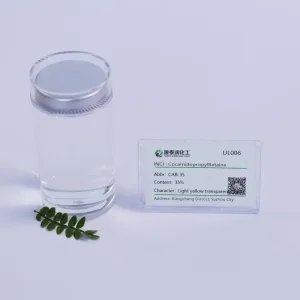
In hair and skin care, SLES 70% provides the primary foaming structure. Its rapid flash-foam profile creates a rich, creamy lather. To mitigate the natural drying characteristics of anionic surfactants, SLES is typically formulated alongside amphoteric co-surfactants like Cocamidopropyl Betaine (CAB-35) or mild amino acid-based surfactants (e.g., Sodium Lauroyl Sarcosinate). This synergistic blend yields a dense, luxurious foam profile while maintaining skin barrier integrity and preventing irritation.
In household cleaners, SLES 70% excels due to its high hard-water tolerance and grease emulsification indexes. It targets and disperses oily soils, suspending them in solution. SLES exhibits a unique response to sodium chloride (salt thickening). When combined with small percentages of inorganic salts, SLES formulations undergo a micellar transition from spherical to worm-like structures, rapidly increasing formulation viscosity without requiring expensive polymeric thickeners.
Beyond retail products, SLES 70% acts as a processing aid in textile manufacturing, agricultural formulations, and construction concrete foaming. Its rapid surface-tension reduction facilitates uniform wetting of fibrous substrates. In polymerization processes, it functions as an emulsifier, stabilizing monomers inside aqueous phases to ensure consistent polymer bead synthesis.
This outline demonstrates SLES 70% in a balanced personal care formulation:
Processing Note: SLES 70% paste must be fully dissolved in water using high-shear mixing before adding co-surfactants to avoid gel-lumping.
Standard commercial specification limits for premium grade Sodium Lauryl Ether Sulfate 70%.
Addressing the key technical, logistical, and commercial inquiries of industrial SLES 70% buyers.
Get in touch for bulk container pricing, REACH compliance certificates, customized COA parameters, or to request SLES 70% paste samples for lab evaluation.
Request Technical SampleComplete your product formulation with our range of complementary thickeners, condition agents, and primary surfactants.