Browse our top-tier chemical and biological ingredients engineered for performance stability
In modern industrial chemistry, rheology control is the difference between product failure and market dominance. Xanthan Gum (CAS 11138-66-2), a high-molecular-weight extracellular polysaccharide produced via the aerobic fermentation of carbohydrates by the bacterium Xanthomonas campestris, stands as the gold standard for bio-based thickeners, suspension agents, and emulsion stabilizers. As global industries shift away from synthetic petroleum-derived polymers, the sourcing ecosystem for industrial and cosmetic-grade Xanthan Gum has evolved into a strategic priority for manufacturing supply chain directors.
This whitepaper outlines the global market mechanics, biosynthetic technological pathways, localized application scenarios, and key integration parameters that procurement executives must master when evaluating high-volume global suppliers and production factories.
The global Xanthan Gum market reached a valuation exceeding USD 1.1 Billion in recent cycles and is projected to expand at a steady compound annual growth rate (CAGR) of 5.8%. The supply side is heavily anchored in industrial manufacturing facilities across East Asia, North America, and Western Europe. Currently, East Asian factories dictate global pricing dynamics due to highly optimized upstream supply chains in corn starch, glucose, and bio-fermentation energy infrastructure.
Key drivers behind the accelerating global consumption include the clean-label movement in processed foods, the rising demand for sulfate-free, clean-beauty formulations in personal care, and technical breakthroughs in hydraulic fracturing fluids (EOR - Enhanced Oil Recovery) where thermal and electrolyte resilience are critical.
Sourcing from verified factories requires rigorous adherence to international standards. High-purity Xanthan Gum must conform to FCC (Food Chemicals Codex), European Union Directive E415, and USP-NF (United States Pharmacopeia - National Formulary) monographs. For personal care formulations, suppliers offering COSMOS-validated, ECOCERT-compliant, and non-GMO grades command a premium. Procurement agents must also mandate Kosher, Halal, and ISO 9001/22000 certifications from their selected manufacturing facilities.
Most standard supplier websites simply list "Xanthan Gum" with a basic specification sheet. However, search engines like Google reward Information Gain—meaning we provide unique technical contexts, structural insights, and formulation science that other websites omit. Below, we break down the molecular rheological dynamics that separate commodity-grade thickeners from high-performance biopolymers.
The performance profile of Xanthan Gum is directly determined by the factory's fermentation and post-processing protocols. Below is a high-level technical roadmap of the standard industrial manufacturing process:
Formulators often face tradeoffs when selecting the ideal rheology modifier. The table below outlines how Xanthan Gum compares to other common polymers in the market, including Hydroxyethyl Cellulose (HEC) and synthetic Carbomer:
| Polymer Type | Rheology Type | Electrolyte Tolerance | pH Range Stability | Sensory Profile |
|---|---|---|---|---|
| Xanthan Gum | Highly Pseudoplastic | Excellent (High Salts) | 2.0 - 12.0 | Slightly slippy, natural feel |
| HEC (Hydroxyethyl Cellulose) | Pseudoplastic | Good | 3.0 - 11.0 | Silky, cushiony feel |
| Carbomer | Plastic / Yield Stress | Poor (Breaks under ions) | 5.0 - 10.0 (Neutralization req.) | Gel-like, fast-breaking |
How premium biopolymers stabilize everyday industrial products
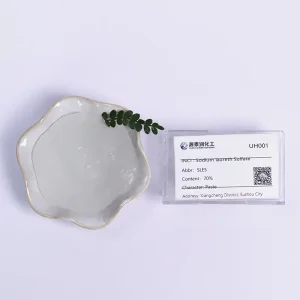
In laundry detergents and cleaning liquids, Xanthan Gum prevents phase separation by suspending insoluble cleaning agents. It shows complete compatibility with anionic surfactants like SLES 70% and non-ionic builders like APG0810.
Modern consumers demand clean, botanical skin care. Xanthan Gum functions as a natural binder, thickener, and emulsion stabilizer in premium facial cleansers, body washes, and emulsions.
As a leading supplier in the daily chemical raw materials industry, Suzhou Yuantairun Chemical Co., Ltd. (YuantaiRun) is dedicated to delivering high-quality products and comprehensive one-stop services to support our customers in R&D, production, and supply chain optimization.
Our mission is to drive innovation and efficiency in the global daily chemical industry by providing cutting-edge solutions tailored to our clients' needs, ensuring that our products originate from well-managed and sustainable resources.
Technical formulation insights and bulk sourcing guidance for procurement specialists
Stay updated with the latest chemical technology advances and supplier market trends
Runtec®SCI85: A mild anionic surfactant with high active ingredient content, excellent compatibility, and high foaming power designed for premium cosmetics...
Learn More ➔Runtec®SCA-30: Sodium Cocoyl Alaninate-An oil-resistant amino acid surfactant with excellent foaming properties, specifically designed for mild shampoos and facial cleansers...
Learn More ➔This is a skin moisturizer compatible with various oils and featuring strong dispersing power, serving as a clean-label alternative to traditional silicones...
Learn More ➔Discover premium surfactants, emulsifiers, and chelants for global manufacturing
Optimize your upstream raw material security, reduce batch variance, and receive direct manufacturer pricing on bulk Xanthan Gum and companion surfactant formulations.
Send Technical Inquiry