Pioneering chemical agents engineered for high stability, advanced rheology modification, and robust performance in extreme regional conditions.

The United Arab Emirates represents one of the most dynamic industrial hubs globally, shifting rapidly from resource extraction to advanced chemical processing and manufacturing. Cationic surfactants, defined by their positively charged hydrophilic head groups, occupy a pivotal role in this transition. Their unique chemical behavior—readily adsorbing to negatively charged substrates—makes them indispensable across multiple GCC industrial pillars: petroleum engineering, seawater desalination, textile finishing, and high-end personal care formulation.
As the regional economy matures, the demand for performance-focused surfactants has expanded beyond simple commodity imports. Today, manufacturers and product developers in Dubai, Abu Dhabi, and Sharjah demand tailored molecular structures that remain stable under hypersaline conditions, elevated temperatures (frequently exceeding 50°C in field operations), and high shearing environments.
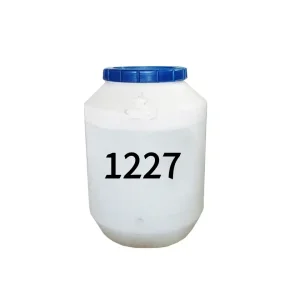
"Cationic surfactants like Dodecyl Dimethyl Benzyl Ammonium Chloride (BKC 1227) are not just processing agents; they are critical inhibitors protecting billions of dollars of pipeline infrastructure in the Arabian Gulf from aggressive microbial and chemical corrosion."

Quantifiable excellence, state-of-the-art laboratory testing, and extensive global distribution capabilities supporting the GCC's growth.
Tailored formulations utilizing advanced cationic and complementary amphoteric surfactants to address regional manufacturing hurdles.
In high-salinity carbonate reservoirs typical of the UAE, cationic surfactants act as superb corrosion inhibitors (forming a protective film over metal infrastructure) and clay stabilizers during hydraulic fracturing.
Meeting the high expectations of the Gulf consumer market for luxury cosmetics requires precise combinations of mild surfactants and hair-substantive cationic polymers.
Due to the hyper-arid climate, water recycle loops in cooling towers and industrial parks require fast-acting bactericidal agents to prevent biofouling.

Navigating the complex regulatory waters of the Middle East chemical market demands an experienced supplier. We ensure all materials supplied to the UAE conform with the Emirates Authority for Standardization and Metrology (ESMA), are supported by detailed Safety Data Sheets (SDS) matching GHS standards, and maintain rigorous quality control via ISO certified facilities.
For personal care manufacturers targeting the growing market in Saudi Arabia and the UAE, we offer fully certified Halal-compliant raw materials, ensuring zero animal-derived cross-contamination. Our logistical footprint leverages the strategic deepwater ports of Jebel Ali (Dubai) and Khalifa Port (Abu Dhabi) to offer just-in-time container deliveries, minimizing inventory holding costs for our GCC partners.
"Our dual focus on performance parameters and regulatory documentation enables our clients to seamlessly launch products in GCC, Levant, and African regions."
Explore our diverse portfolio of high-purity anionic, non-ionic, amphoteric, and cationic materials formulated for optimal industrial output.



With global mandates shifting rapidly toward sustainability, the surfactant industry is undergoing a structural transition. Traditionally, cationic surfactants were heavily dependent on petroleum derivatives. Our current technical roadmap actively shifts production toward bio-based feedstocks, derived from renewable seed oils such as coconut and palm kernel.
In addition to sourcing, our engineering labs are focusing on the development of esterquats (ester-linked quaternary ammonium compounds). Unlike standard alkyl quats, esterquats feature an ester linkage in the lipophilic tail which provides a site for rapid enzymatic cleavage by environmental microorganisms. This results in significantly improved biodegradation rates in industrial wastewater plants, solving a critical challenge faced by wastewater facilities in the UAE.
R&D Benchmark: All our new-generation cationic conditioners and hair-care raw materials target a biodegradation rating exceeding 60% within 28 days (OECD 301B tests), aligning directly with the UAE Net Zero 2050 strategic initiative.

Testing compatibility across complex multi-surfactant matrices under dynamic shear rates.

Minimizing aquatic impact, verifying safety parameters for delicate regional marine ecosystems.
Delivering consistent molecular weight distributions, reliable shipping networks, and superior chemical properties.
From raw synthesis to custom blends and regional warehousing—we manage the entire pipeline.
Our laboratories design custom active concentrations and complex product viscosities for your unique brand.

Strategic raw material sourcing allows us to offer competitive pricing without risking chemical purity.

Coordinating with regional cargo carriers to guarantee steady factory input and avoid costly downtime.
Expert technical insights regarding cationic surfactant behavior, compatibility, storage, and industrial safety.
Cationic surfactants bear a positive charge on their hydrophilic head, while anionic surfactants carry a negative charge. When mixed directly in aqueous solutions, they undergo strong electrostatic attraction, leading to the formation of an insoluble, electrically neutral complex or precipitate (often referred to as an "anionic-cationic salt"). This precipitation neutralizes their surface-active properties. Formulators bypass this by using amphoteric surfactants (like CAB-35) as coupling agents, or utilizing non-ionic surfactants to stabilize the micelles.
Benzalkonium Chloride (DDBAC/BKC 1227) is a nitrogen-based cationic surfactant that adsorbs onto the negatively charged cell walls of algae and bacteria. Once attached, the hydrophobic alkyl tail penetrates the cellular membrane, disrupting the lipid bilayer. This causes cellular leakage, blocks essential metabolic pathways, and leads to rapid cell lysis. Its efficacy remains robust across a broad pH spectrum, making it ideal for cooling towers in arid environments like the UAE.
High ambient temperatures exceeding 45°C can trigger phase separation, viscosity drops, or chemical degradation in unstable formulations. Raw materials such as Cocamide DEA or SCI must be stored in well-ventilated warehouses, away from direct sunlight, in hermetically sealed UV-stabilized drums. Temperatures should ideally be maintained below 35°C to prevent hydrolysis. Our shipments to the Middle East utilize specialized containers to safeguard product consistency during transport.
These cationic polymers possess high charge densities. When applied to damaged hair fibers (which exhibit a strong negative charge due to protein loss), the polymers adsorb onto the cuticle. This forms a micro-thin, smooth conditioning layer that neutralizes static charge, decreases friction between fibers, and prevents mechanical damage during dry combing. They also enhance the stability and density of the foam generated by primary surfactants.
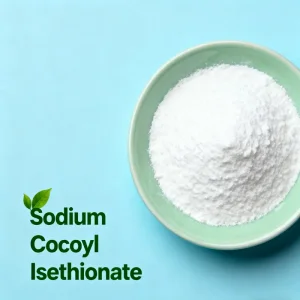
Yes, our entire line of personal care chemical raw materials—including fatty acid derivatives like Cocamide Methyl MEA (CMMEA) and Sodium Cocoyl Isethionate—is synthesized from vegetable sources (primarily coconut and palm kernel oil). We maintain full processing transparency to guarantee that no animal fat derivatives enter our manufacturing lines, ensuring complete compliance for products targeted at Halal markets.
You can request chemical samples directly by clicking our inquiry button or contacting our regional sales desk. We ship targeted samples with full certificates of analysis (CoA), material safety data sheets (MSDS), and starting formulation guides to assist your R&D chemists during the evaluation phase.
Stay updated on manufacturing trends, regulatory changes, and chemical formulation breakthroughs.
A deep dive into using Sodium Cocoyl Isethionate (SCI 85%) to formulate waterless cosmetics, focusing on foam kinetics and compatibility with mild cationic conditioners.
Exploring the synthesis, mildness profile, and sebum-cleansing capabilities of SCA-30, optimized for premium sulfate-free baby shampoos.
Evaluating the eco-toxicological impact of textile softeners in greywater systems and the transition to rapid-biodegradation cationic systems.
Connect with our senior technical sales team for comprehensive chemical specs, custom blending options, and logistical support across the UAE and global markets.
Send Inquiry Now