Riyadh Market White Paper: Zwitterionic Surfactants Analysis
Analyzing Saudi Vision 2030, industrial diversification, chemical innovations, and localized application landscapes in the GCC region.
1. The Strategic Role of Zwitterionic Surfactants in Riyadh's Industrial Renaissance
Riyadh, the capital and largest economic center of Saudi Arabia, is undergoing an unprecedented industrial expansion under the framework of Saudi Vision 2030. Traditionally centered on petro-economy, the Kingdom is rapidly building its domestic manufacturing capabilities in down-stream fine chemicals, cosmetics, daily care products, and industrial clean-tech. Zwitterionic surfactants (amphoteric surfactants possessing both positive and negative charges on the same molecule depending on pH levels) represent a key building block in this industrial diversification.
In the Riyadh market, the demand for high-quality zwitterionic surfactants, specifically betaines (CAB-35, Lauryl Hydroxysultaine, and Lauroamphoacetates) has surged. This growth is driven by local environmental mandates to reduce sulfate levels, conserve water, and shift toward biodegradable raw materials. Furthermore, Riyadh's hot arid climate and hypersaline water conditions present distinct chemical formulation challenges that only advanced amphoteric structures can resolve.
2. Unlocking Local Riyadh Applications: Desalination, Oilfields, and FMCG Production
Zwitterionic surfactants are highly favored in Riyadh's localized industries due to their unique properties: excellent compatibility with ionic species, strong foam stability across all pH ranges, and extreme tolerance to high electrolyte concentration (salinity). The primary industrial drivers include:
- Enhanced Oil Recovery (EOR) and Drilling Fluids: Saudi Aramco's operations require surfactant formulations that remain stable under ultra-high temperatures and hypersaline reservoir conditions (high Ca2+ and Mg2+ concentrations). Zwitterionic options like Lauryl Hydroxysultaine and Cocoamidopropyl Sulfonate Betaine outperform standard anionics by preventing precipitation.
- Desalination & Industrial Water Systems: Riyadh depends heavily on desalinated water piped from the coasts. High-temperature anti-scaling and anti-corrosive formulations employ amphoteric surfactants for their stabilization properties and biodegradable footprints.
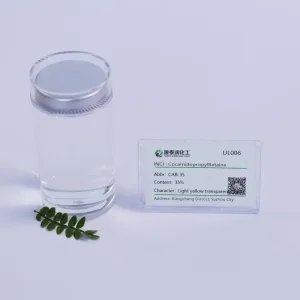
- FMCG and Cosmetics Manufacturing: Local manufacturing clusters in Riyadh's Second and Third Industrial Cities are scaling up domestic shampoo, hand wash, and baby care production to replace imported finished goods, creating a continuous demand for bulk surfactants like Cocamidopropyl Betaine (CAB-35).
3. China-to-Saudi Arabia Supply Chain Advantage
As a leading Chinese chemical manufacturer and exporter, Suzhou Yuantairun Chemical Co., Ltd. addresses the major pain points of Riyadh-based purchasing managers: pricing volatility, quality consistency, and freight transit times. By integrating upstream raw materials (such as coconut oil derivatives and tertiary amines) and implementing automated synthesis processes, we offer a steady supply chain. We coordinate directly with major shipping lines to transport raw chemical materials from Shanghai or Ningbo ports directly to King Abdulaziz Port in Dammam or King Abdullah Port in Rabigh, followed by fast overland rail transit to the Riyadh Dry Port, ensuring just-in-time delivery for local factories.